
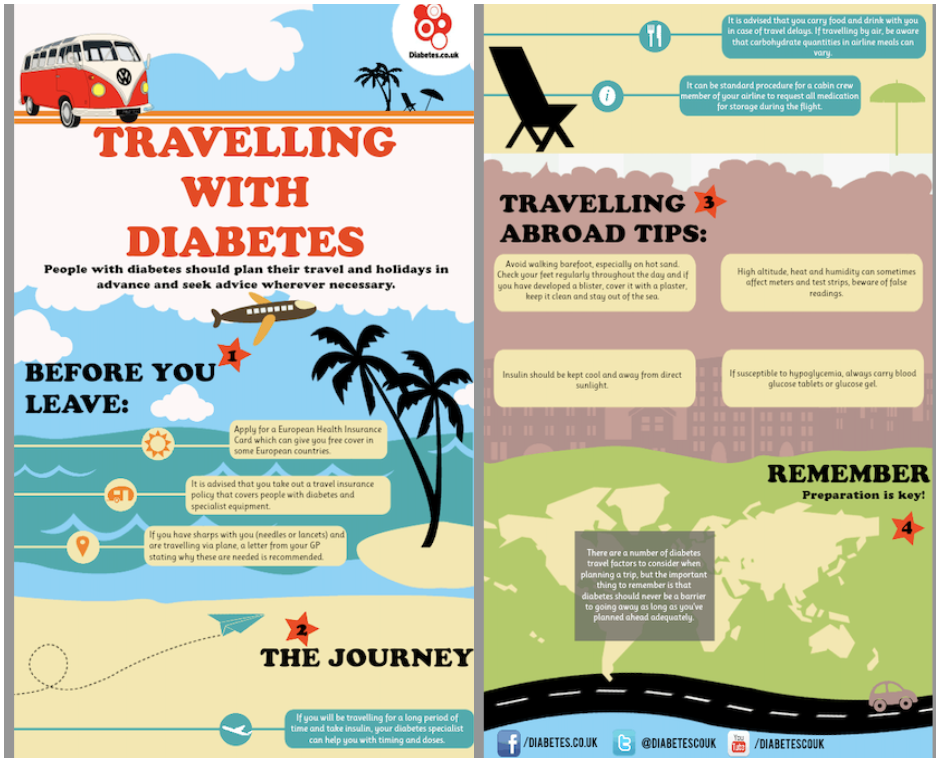
Beyond the Pictures: How to Analyse an Infographic
Learn how to score high in IBDP English Paper 1 by analysing an infographic effectively. This blog explains how to move beyond simple description and examine audience, purpose, visual features, layout, language, and reader effect. Using the “Travelling with Diabetes” infographic from Diabetes.co.uk as an example, it shows students how to write more thoughtful, focused, and evaluative analysis. Ideal for IB English Language and Literature students, this guide offers clear Paper 1 tips to help improve infographic analysis and achieve stronger exam results.
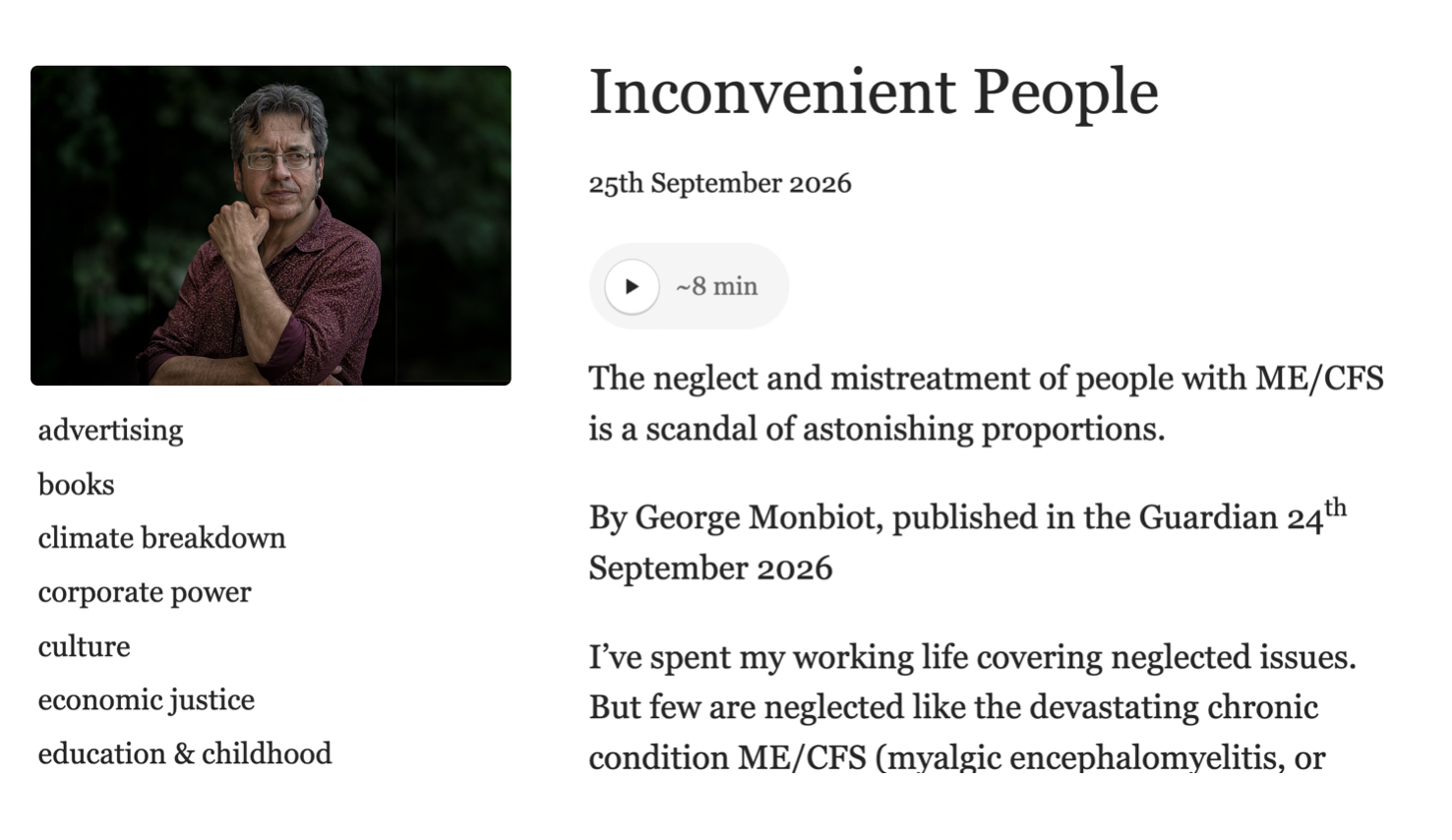
Paper 1 Skills: Writing About Structure
Learn how to analyse language and structure for IB English Paper 1 using George Monbiot’s “Inconvenient People” as a model text. This guide explains how Monbiot uses persuasive techniques such as emotive diction, metaphor, direct quotation, statistics, contrast, and structural development to expose the neglect and mistreatment of people with ME/CFS. Designed for IB English students, this Paper 1 resource shows how to discuss purpose, audience, message, and the organisation of ideas in a literary or non-literary extract, taught at Lead Academics HK by IB examiner and founder Robyn Lee Goyette.

How to Evaluate in Paper 1: The “So What?” Skill
How to Evaluate in Paper 1: The “So What?” Skill
In IBDP English A Paper 1, evaluation means explaining why a writer’s choice matters.
Analysis says: The white chef’s jacket suggests professionalism.
Evaluation goes further: This is effective because it makes the audience view the chef as credible and authoritative.
Evaluation can appear throughout your body paragraph. Whenever you explain why a writer’s choice is significant, how it affects the audience, or how it supports the writer’s purpose, you are evaluating.
The link, however, is one of the most effective places to make your evaluation clear. Rather than closing your body paragraphs by simply repeating your point, the link should evaluate the paragraph’s topic.
For example, if the paragraph topic is about professionalism, the link should evaluate how successfully the writer or image presents professionalism:
As a result, the image presents Von Der Pool as a credible professional whose authority is supported by both her uniform and confident body language.
By returning to the topic, you explain why the writer’s choices are effective.
A strong evaluative sentence taps into the reader’s mindset. It asks how the writer’s choices guide the audience to think, feel or believe something. This is important because Paper 1 evaluation is not just about spotting techniques; it is about explaining how those techniques influence the audience and support the writer’s purpose.

Paper 1: Thematic Approach
One of the biggest mistakes students make in IB English A Paper 1 is organising their essay by features rather than by ideas. A features-based essay usually has paragraphs like: “The writer uses diction,” “The writer uses tone,” “The writer uses imagery,” or “The writer uses structure.” While this can seem clear, it often leads to a mechanical essay that lists techniques instead of building an argument.

From Tone to Voice: Smarter Language Analysis
Is voice the same as tone? If you’re trying to avoid vague labels like “sad,” “powerful,” or “serious,” my most recent blog gives you a simple rule for telling them apart: tone is the feeling, but voice is the speaker’s identity or role. I’ll apply that rule to an extract from Mayura Saavi’s “The Footprints of Gautami Mahaprajapati,” published by The Hyphen, beginning “And so, she had made up her mind” and ending “it is only because of my mother’s teachings.”
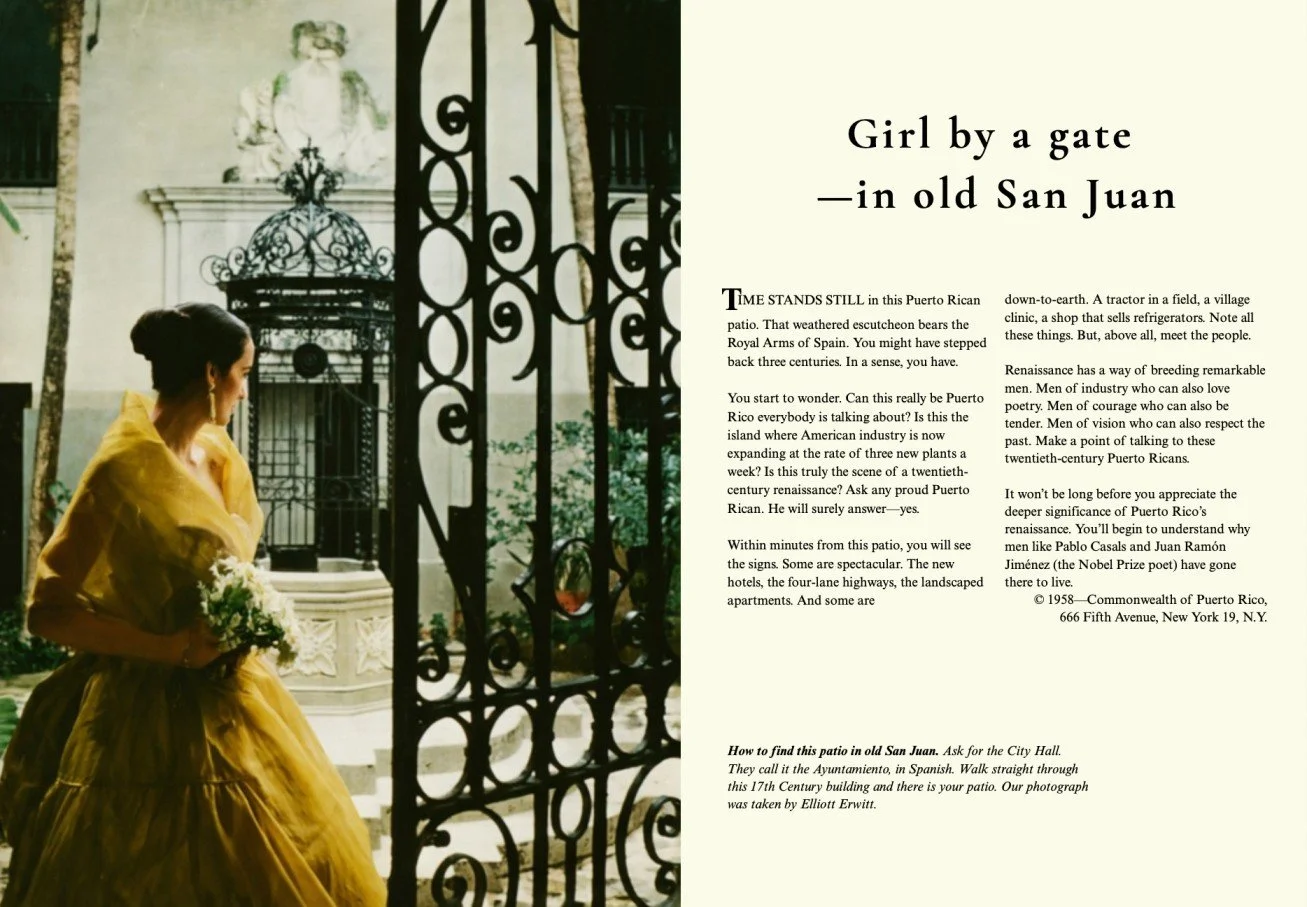
Paper 1: Crit C — Beyond “Firstly” and “Moreover”
In the past, transitions like “Firstly,” “Secondly,” and “Moreover” might have been enough to show organisation. But that kind of linking can feel a bit mechanical to modern readers. Stronger IB English Paper 1 essays use organic transitions, meaning each paragraph feels like it naturally grows out of the one before it, instead of sounding like a list of separate points.
That is one reason the essay below scored well for Criterion C. Each paragraph builds on the previous paragraph. The essay moves from tourists, to business-minded readers, to educated middle-class readers in a way that feels logical and easy to follow, rather than forced.
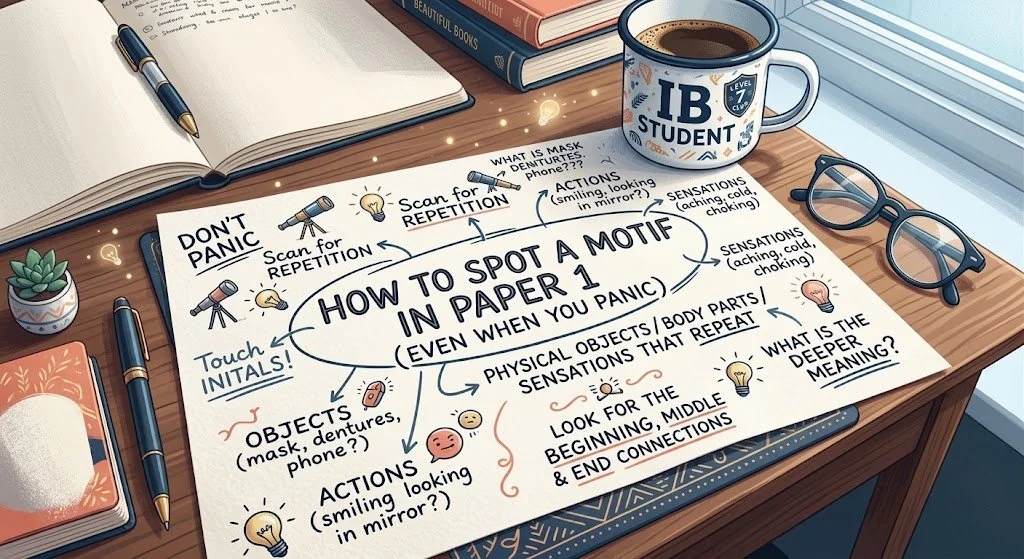
When the Exam Prompt Says "Motif" and You Freeze
For many IB English students, encountering a Paper 1 prompt about motifs triggers instant exam panic. Treating motifs as abstract, hidden codes is one of the biggest pain points in unseen text analysis. In this guide, IB Examiner Robyn Goyette demystifies motifs by showing students that they are simply recurring physical objects, body actions, or sensations. Using a practical 3-pass scanning method and a clear Beginning-Middle-End writing formula, students will learn how to confidently track tangible details across both fiction and non-fiction texts—turning a major exam hurdle into a Level 7 analysis strategy.

Feature Approach vs Thematic Approach in IB English Paper 1
In IB English Paper 1, students often organise paragraphs around techniques such as irony, imagery, typography, or layout. While this feature approach can help identify important choices, a thematic approach usually creates a stronger essay because it organises paragraphs around claims about meaning. Using this Nebraska tourism advertisement as an example, this post explains how shifting from features to themes can make Paper 1 analysis clearer, more focused, and more convincing.

Paper 1 — Expressing Crit B “Evaluation” in Writing
Learn how to effectively express Criterion B “evaluation” in IB English Paper 1 with this detailed model response. This guide explains how to move beyond analysis by examining impact on the reader and social commentary, using a matcha infographic advertisement as a practical example. Discover how to structure strong analytical paragraphs, integrate evidence, and evaluate how texts shape beliefs, values, and cultural attitudes for higher-level Paper 1 success.
IB English Paper 2 — Symbols
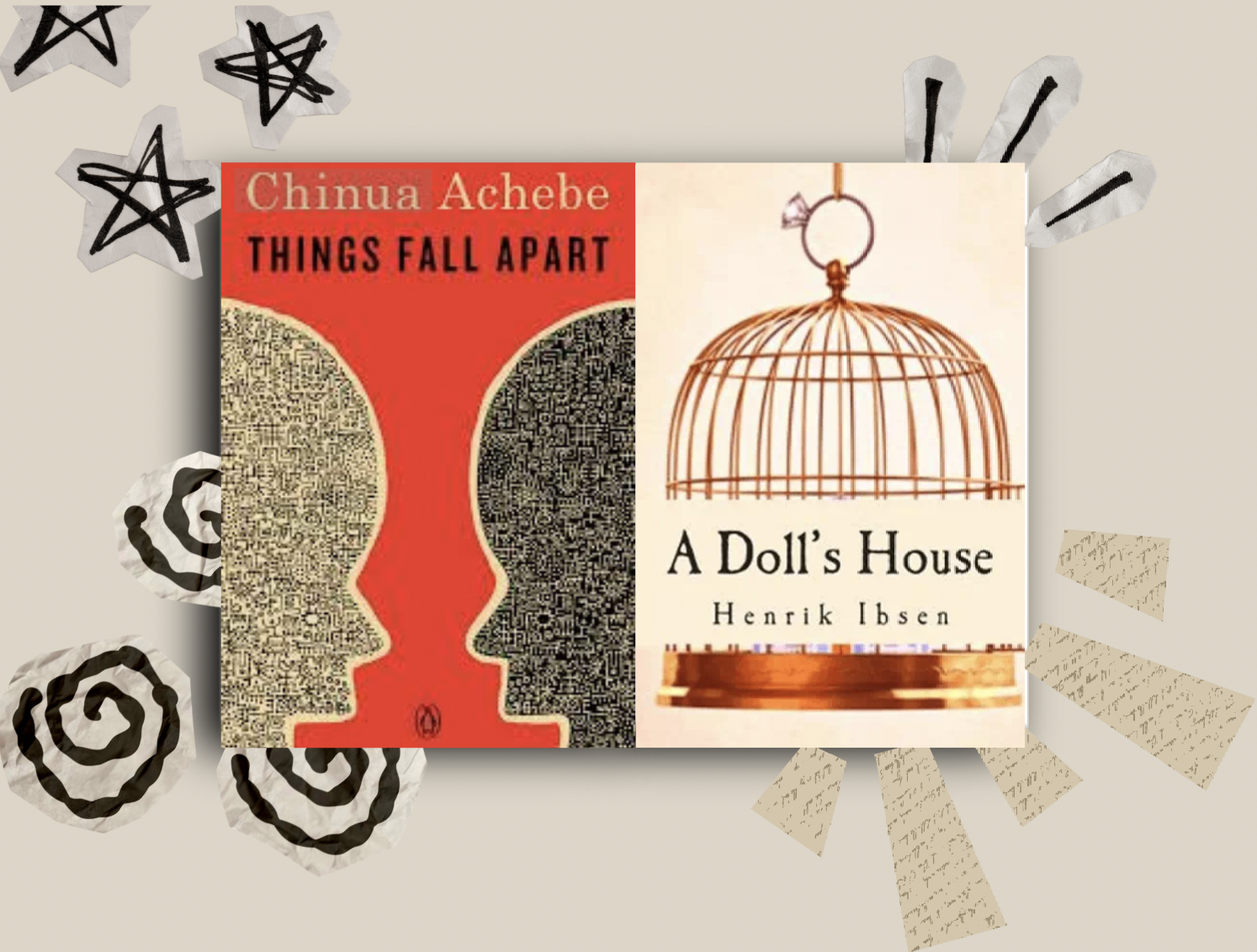
If you’re struggling with how to balance literary analysis, contextual comparison, and a clear thesis in your IBDP English A Comparative essay, remember that focusing on how symbols like Nora’s Christmas tree and Okonkwo’s yams reveal identity under pressure can help you move beyond plot summary and directly address the rubric’s demand for conceptual depth and comparative insight.

IB English Paper 1 — Analysing a Brochure
This IB English A Paper 1 text is a prospectus-style promotional brochure about a girls’ college, commenting on its values, academic ethos and community environment. It is targeted at prospective students and their parents, specifically those seeking a supportive, high-achieving and values-driven school. The purpose is to persuade readers to attend the college by presenting it as inclusive, nurturing and academically successful. This aim is accomplished through inclusive language, positive emotive diction, aspirational imagery and the strategic use of photographs that visually reinforce belonging, opportunity and shared values.

IB English Paper 1 Tip: Mastering the Concluding Evaluation (M25 Website)
If you are preparing for IB English A Paper 1, mastering the concluding evaluation can significantly improve your marks. Many students focus on identifying literary devices and explaining their effects, but top‑band responses go further. To reach a 6–7 in IB English, you must show conceptual understanding by evaluating how a text works for its audience and purpose. This guide explains exactly how to strengthen your concluding evaluations and improve your Paper 1 analysis.
IB English Paper 1 — Comic Strip (SPEC 2021)
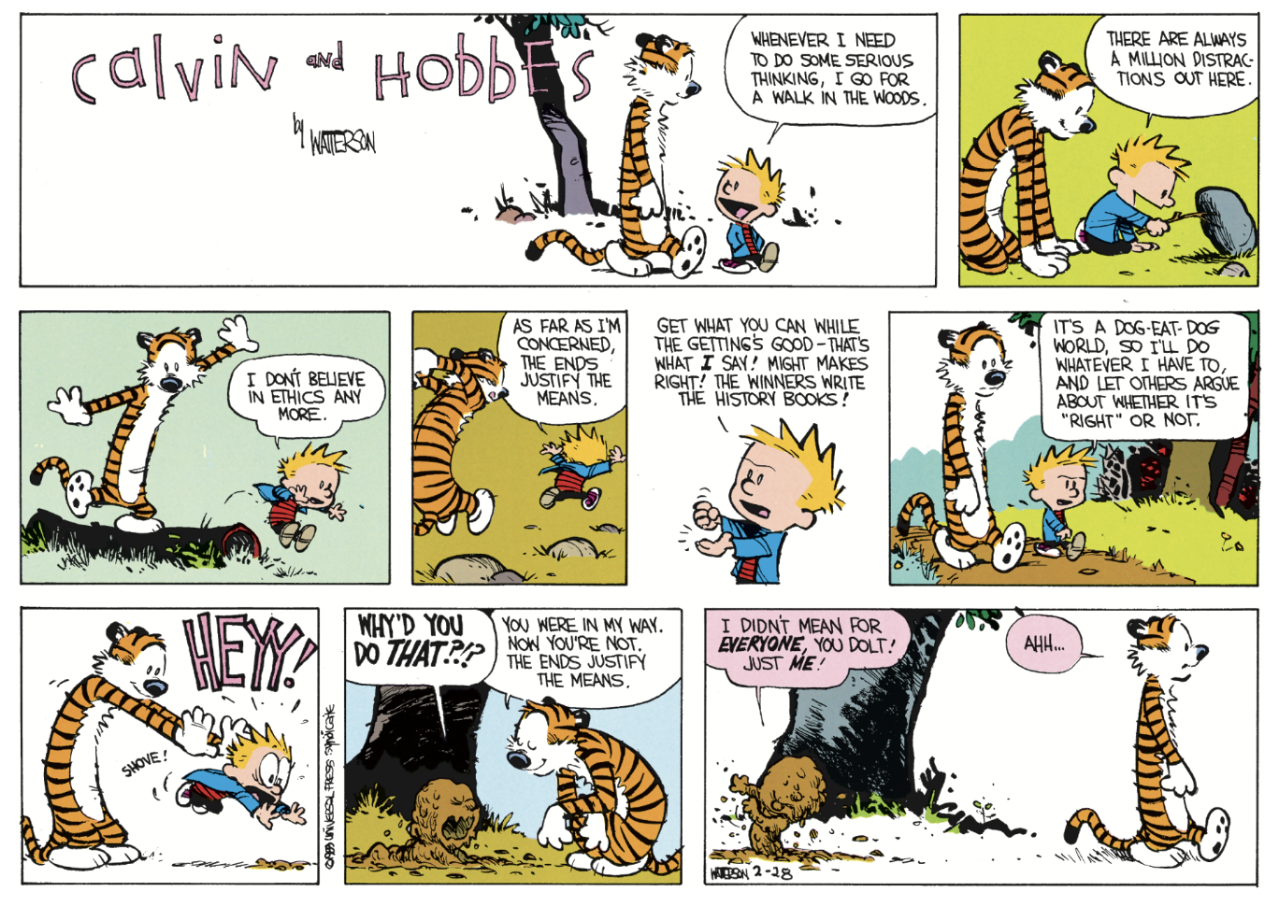
This IBDP English A Paper 1 essay provides a detailed literary analysis of Bill Watterson’s 1989 Calvin and Hobbes comic strip, exploring how irony, visual exaggeration, panel sequencing, and structural progression expose the flaws of selfish moral reasoning. Through close examination of language techniques such as aphorism, hyperbole, situational irony, and visual contrast, the essay demonstrates how Watterson critiques the belief that “the ends justify the means.” Ideal for IB students, this analysis highlights how cartoon structure and humor function as persuasive devices, guiding readers to question self-centered ethics and reflect on fairness, responsibility, and moral complexity.
IB English Paper 1 — memoir-style feature article (November 2018)
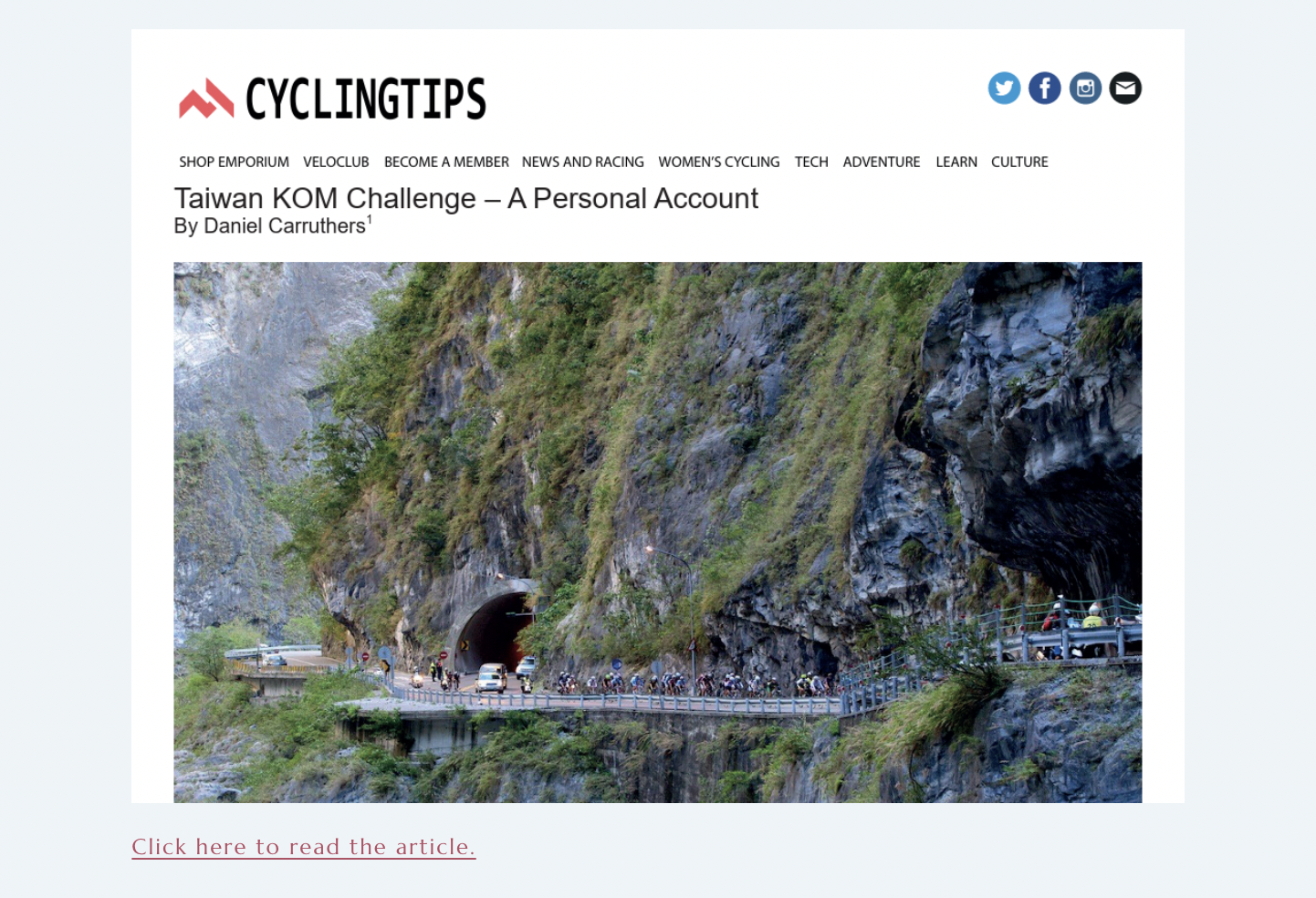
This IB English past paper from November 2018, a memoir-styled personal recount, published as a feature article in CyclingTips, persuades keen and endurance-focused cyclists to participate in the Taiwan KOM Challenge by presenting it as prestigious, extremely difficult, visually breathtaking, and ultimately rewarding. The writer first establishes its elite status through imperative language and the authority of the publication. He then emphasises its severity through statistics, hyperbole, and powerful photographic evidence. Next, he highlights its spectacular beauty through vivid imagery and striking visuals. Finally, he presents personal triumph and social proof to frame the challenge as a defining and admired achievement within the cycling community.

IB English Paper 1 — Analysing an Advertisement (paragraph framework)
IB English Paper 1 sample analysis of a 1973 Bulova Accutron advertisement, showing how language and visual techniques create persuasion, fear, and social commentary, taught at Lead Academics in CWB, Hong Kong, by Robyn Lee Goyette, ivy league tutor and IB examiner.
IB English Paper 1 — Exemplar 23/25
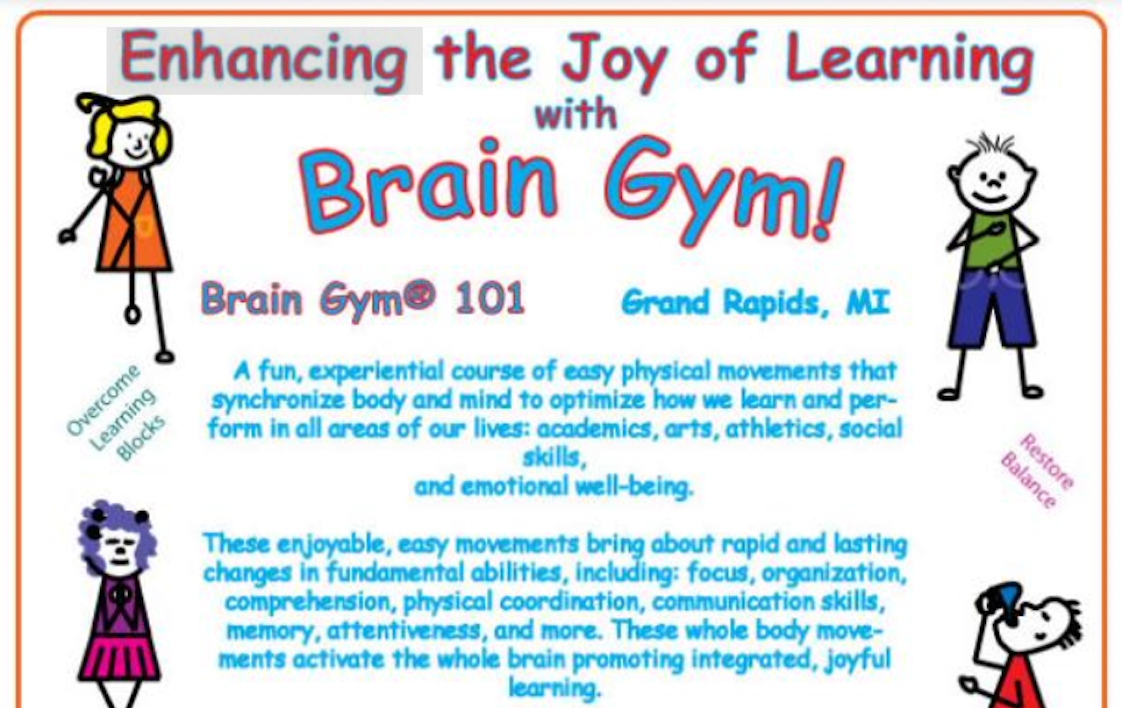
This IB English Paper 1 — Exemplar 25/25 provides a top‑band model response analysing a promotional flyer for Brain Gym® 101. The essay demonstrates how to achieve full marks by clearly identifying text type, purpose, target audience, and persuasive strategies. Through detailed analysis of language, layout, colour, typography, and visual structure, the response shows how enthusiastic diction and playful design work together to construct credibility and emotional appeal. It explores how the flyer targets teachers, parents, therapists, and learners by balancing logical benefits, professional ethos, and an urgent call to action. This exemplar highlights strong thesis development, sustained evaluation, and precise commentary on how language and visual features shape audience perception. Ideal for IB English A: Language and Literature students, this sample illustrates what a 25/25 Paper 1 analysis looks like and how to structure a cohesive, perceptive, and insightful response under exam conditions.
IB English Paper 2 — Exemplar Essay
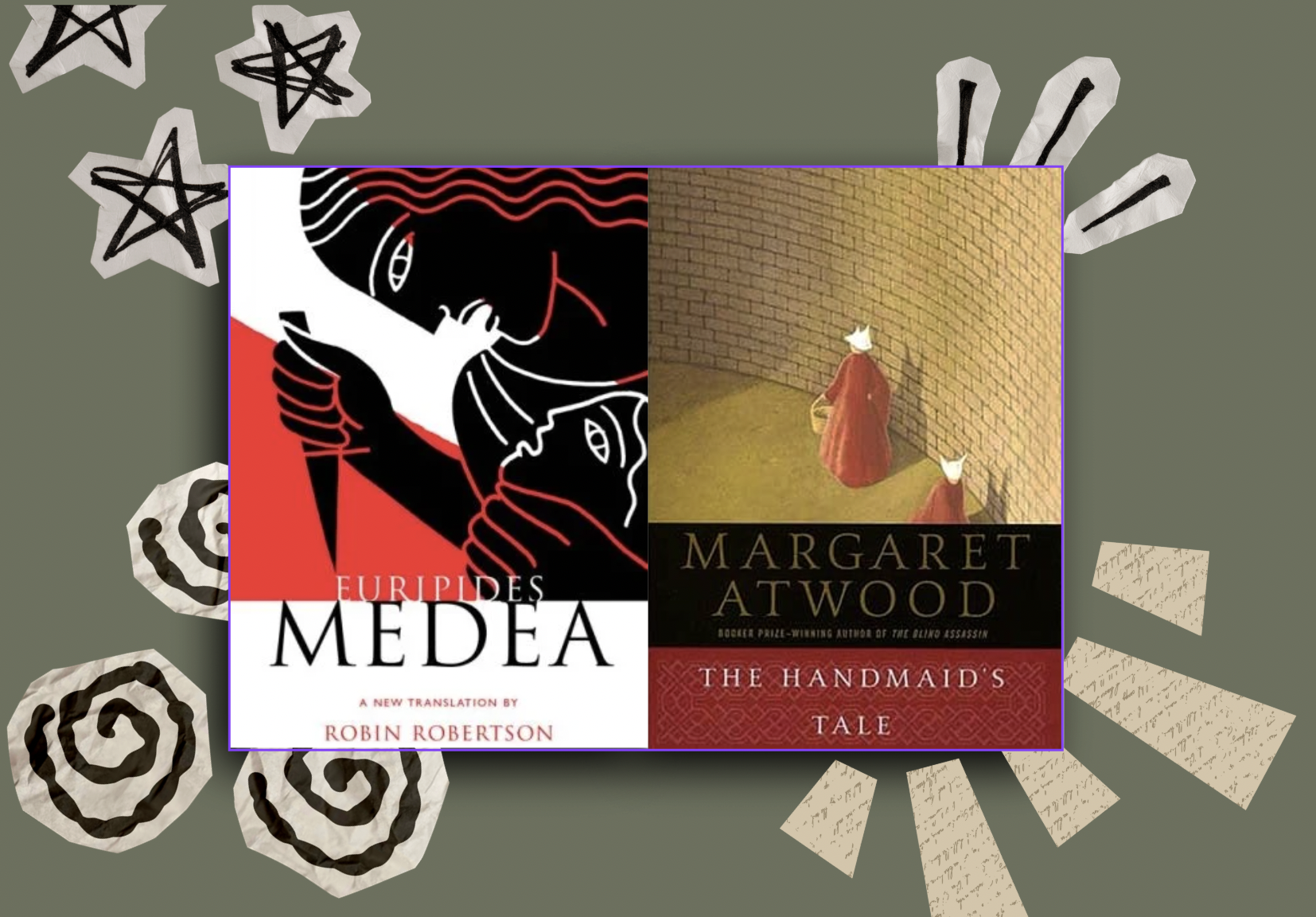
Read a full IB English Paper 2 exemplar essay (25/25) from the May 2025 TZ3 exam, analysing Medea and The Handmaid’s Tale on the theme of change. This model response demonstrates how to structure a comparative thesis, integrate textual evidence, develop ambiguity, and sustain high-level analysis across all assessment criteria. A must-read guide for IB English HL and SL students aiming for a Band 7.

IB English Paper 2 — Exemplar Essay 25/25
IB English Paper 2 Comparative Essay: The Great Gatsby and A Doll’s House
Explore a high‑level IB English A Literature Paper 2 comparative analysis of The Great Gatsby by F. Scott Fitzgerald and A Doll’s House by Henrik Ibsen. This comparative literature essay examines how minor characters function as foils, drivers of conflict, and tools for social critique, revealing themes of illusion, identity, confinement, and societal corruption. Ideal for IB students preparing for exams, this analysis demonstrates advanced comparative structure, authorial choices, and Band 7‑level critical writing skills.

IB Paper 1 — How To Analyse Multiple Audiences
Learn how to analyse multiple audiences in IB Paper 1 using a simple 4-step method: identify the target audience, determine what they value, link techniques to those values, and evaluate effectiveness with nuance. Master Paper 1 essay writing at Lead Academics in CWB, Hong Kong, with founder, premier academic tutor, and IB English examiner Robyn Lee Goyette.

How to Nail Your Paper 1 Conclusion (Even When Time Is Running Out)
If you’re an IBDP English A student, you already know that the hardest part of Paper 1 isn’t always the analysis, it’s ending your essay smoothly when the clock is basically attacking you. The good news? You don’t need a long, complicated conclusion. You need a clear, evaluative one. That’s where the “quick conclusion” template comes in.
In Paper 1, examiners are looking for two main things at the end of your essay: (1) a clear judgment about how effective the text is, and (2) a sense that you understand the target audience and purpose. Your conclusion is not the place to repeat every technique you’ve mentioned. Instead, it’s your moment to step back and answer the big question: So what? Did it work? For whom?