How to Transition Seamlessly Across Paragraphs
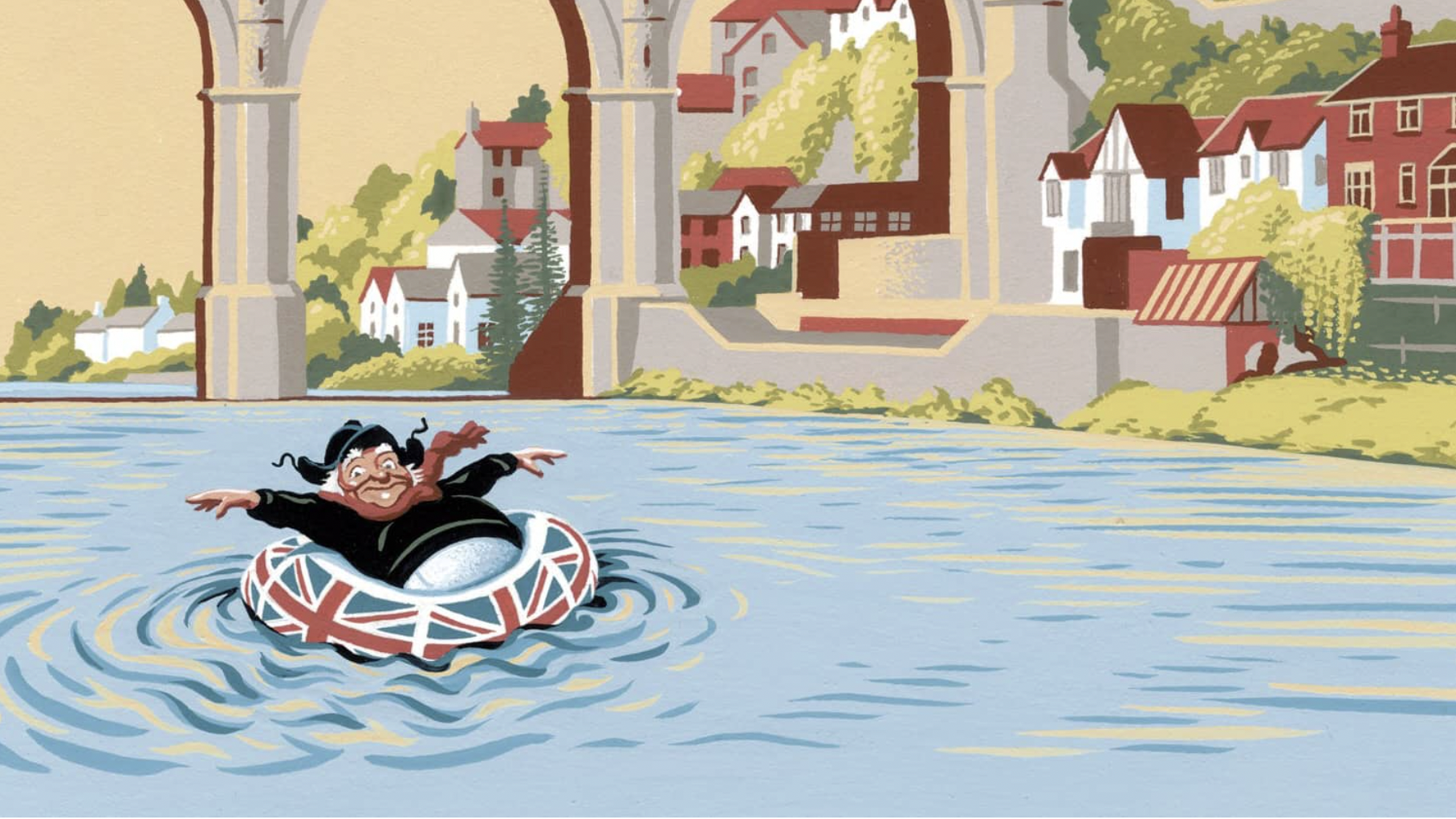
from Bill Bryson’s Notes from a Small Island for World Book Night
The Secret to Seamless Paragraph Transitions
Let’s be honest: most IB essays don’t lose marks because students lack ideas, they lose marks under Criterion C: Focus and Organisation because those ideas aren’t clearly connected. One paragraph ends, another begins, and the examiner is left thinking, Wait… how did we get here?
Strong organisation in IB writing isn’t just about having paragraphs; it’s about using clear transitions so ideas develop logically from one to the next.
The good news? There’s a quick and easy transition trick that consistently lifts Criterion C marks, and this Paper 1 essay (provided at the end of this blog) on Bill Bryson’s travel article “Notes from a Small Island: Extract” is a perfect example of how seamless movement between ideas creates a controlled, coherent response.
The Golden Rule: Carry One Idea Forward
A strong transition doesn’t repeat everything. It simply picks up one key idea from the previous sentence and moves it forward.
Look at how this essay does this:
The introductory paragraph ends with “the uncertainty and embarrassment of arrival”.
The 1st body paragraph begins with “The article develops this idea”.
The introductory paragraph ends by identifying “the uncertainty and embarrassment of arrival.” The first body paragraph then begins with “The article develops this idea,” directly picking up that same concept. This creates a smooth transition because the writer builds on an existing idea while introducing a new one, showing clear organisation and helping meet IB Criterion C expectations.
Look at how easy this essay transitions between body paragraphs::
Each paragraph ends by establishing a key idea, and the following paragraph picks up that same word or concept to continue the argument. Rather than introducing new ideas, the transitions reuse and develop what has already been established, creating a clear and logical flow.
The first body paragraph ends with “England looks welcoming but feels socially distant.”
The second body paragraph begins with “The writer continues to reinforce this discomfort by contrasting his inner thoughts with his actions.”
The second body paragraph ends with “the arrival as awkward rather than confident.”
The third body paragraph begins with “This sense of awkwardness is reinforced in the image, which uses structure to present the traveller as an outsider.”
The image paragraph ends with “arrival is isolating as well as exciting.”
The next paragraph begins with “The article mirrors this tension by concluding without resolution…”
The second‑last paragraph ends with “the arrival feel incomplete and uncomfortable.”
The conclusion begins with “Overall, arrival in England is shown to be awkward and isolating.”
In short, effective transitions are what turn good ideas into a well‑organised IB essay. By reusing key words and concepts from one paragraph to the next, your writing will maintain focus and help the reader follow the argument easily. This kind of clear, logical movement between ideas is exactly what IB examiners reward under Criterion C.
Paper 1 Essay On Bill Bryson’s travel article “Notes from a Small Island: Extract”
The article presents the writer’s arrival in England as a mix of excitement and discomfort. Through the use of structure, the writer presents how initial romantic expectations quickly turn into feelings of awkwardness and isolation. By controlling narrative movement, pacing, contrast, and the ending, the article highlights how England appears welcoming on the surface but is difficult to enter socially. Both the article and the accompanying image use structure to emphasise the uncertainty and embarrassment of arrival.
The article develops this idea by structuring the arrival in England as an experience that is exciting at first but quickly becomes awkward. The linear narrative follows the writer as he moves through the town, taking the reader from the busy ferry terminal to the quiet streets, which slowly highlights his isolation. The paragraphs reflect changes in mood, beginning with excitement and romantic expectations before shifting to disappointment and discomfort. The writer controls pacing by starting with long, descriptive sentences, such as the description of the terminal being “warm with activity,” which builds atmosphere and anticipation. This is then suddenly interrupted by short, blunt dialogue like “We’re shut,” which mirrors how quickly his hopes are crushed. The juxtaposition between the imagined warmth of hospitality and the cold reality of rejection adds irony. The article ends with hesitation rather than resolution, as the narrator stands outside the Churchill, showing that arrival is uneasy rather than successful and reinforcing the idea that England looks welcoming but feels socially distant.
The writer continues to reinforce this discomfort by contrasting his inner thoughts with his actions, highlighting his awkwardness. The long fantasy about a friendly conversation and a large meal, where the writer imagines saying, “Oh, but I couldn’t possibly ask you to feed me at this hour,” followed by a detailed list of food, indicates how hopeful and imaginative he is. This moment is immediately ruined when he “tripped on a step, crashing face‑first into the door” and is then cut off by the sharp dialogue “We’re shut,” creating a comic but uncomfortable moment. This sudden shift highlights how embarrassment and misunderstanding shape his experience, reinforcing the idea that arriving in England is socially uncomfortable. Furthermore, placing this scene in the middle of the article makes it a turning point from optimism to embarrassment. By repeatedly cutting off the writer’s hopeful inner thoughts with blunt reality, the article presents the arrival as awkward rather than confident.
This sense of awkwardness is reinforced in the image, which uses structure to present the traveller as an outsider. He is placed in the lower-left foreground, floating awkwardly on an inner tube, which suggests a lack of control and stability. This illustrates that he is not grounded and is unprepared for where he has arrived. The low point of view puts the viewer at water level, making us feel his uncertainty. In contrast, the town in the background looks solid and calm, framed by the bridge but still far away, creating a clear contrast. The Union Jack ring stands out because of its bright colour, evincing his excitement about England, but it also creates irony by making him look naïve and out of place. Overall, the image supports the idea that arrival is isolating as well as exciting.
The article mirrors this tension by concluding without resolution, suggesting that while England appears appealing, the writer feels unsure and excluded. Instead of being welcomed, he stands outside the Churchill, watching confident, well-dressed people inside. This ending leaves the reader in the same uncomfortable moment as the writer. By ending on hesitation rather than action, the writer demonstrates that England may look attractive and inviting, but it is difficult to enter socially. This unfinished ending makes the arrival feel incomplete and uncomfortable.
Overall, arrival in England is shown to be awkward and isolating. The linear narrative, shifts in pacing, contrast between imagination and reality, and unresolved ending all work together to reveal how the writer’s expectations are repeatedly undermined. The image reinforces this idea by visually presenting the traveller as unprepared and separate from his surroundings. Together, these structural choices support the article’s purpose of showing arrival as emotionally uncertain, where England looks inviting but remains socially inaccessible.