May 2018 Past Paper 1 Practice: two ways to organise your response
You can find this paper at English Teacher Abroad Anthology V.2
Paper 1 — organised by formal features
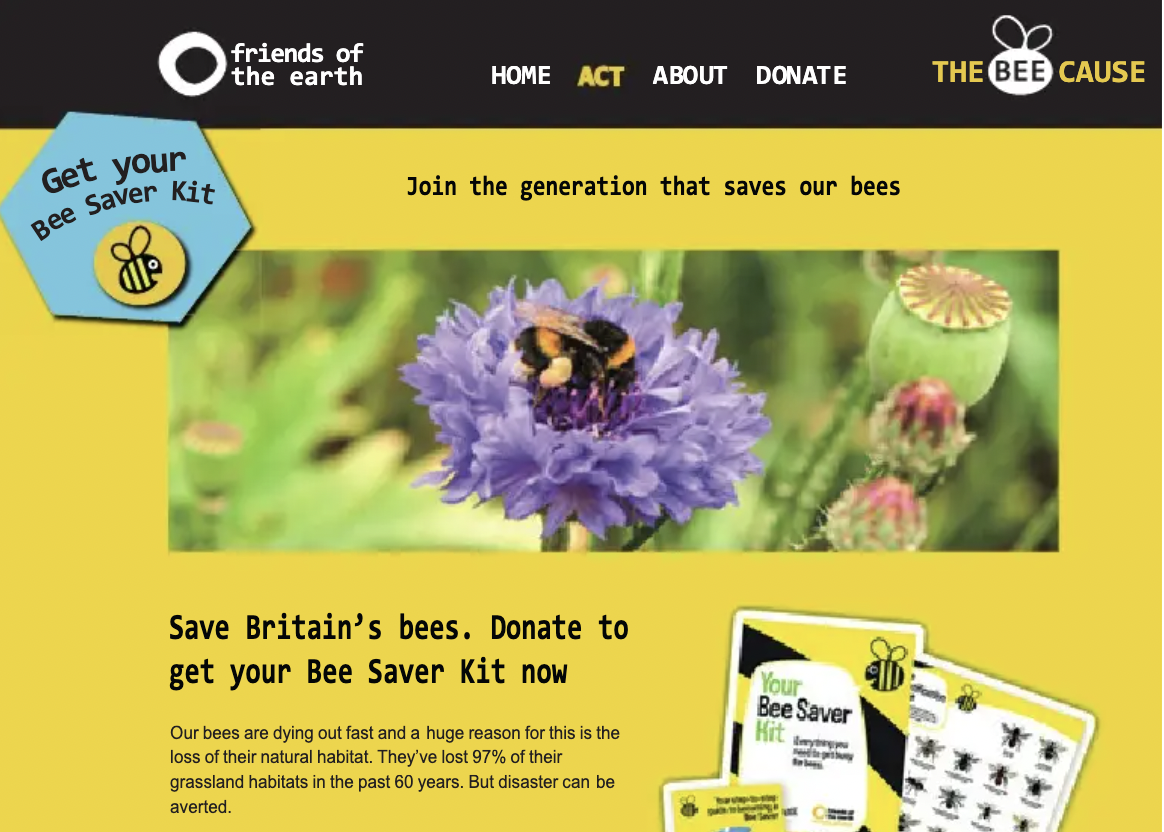
This text is an online appeal about protecting bees, commenting on the environmental threat of bee population decline and habitat loss. It is targeted at young people who care about the environment. The purpose is to persuade readers to donate money to support bee conservation. The aim is accomplished through a clear problem–solution format, bee imagery, bright yellow colours, and honeycomb graphics, a combination of emotive and inclusive language, engaging visual, and multimodal elements that mirror collective effort.
The text aims to persuade environmentally conscious readers to donate by using a clear problem–solution structure with a strong call to action. The page moves from presenting the problem of bees being in danger, to offering the Bee Saver kit as a solution, then providing supporting details in sections like “What’s in the kit” and “How we’re helping,” before ending with a clear donation section. This clear structure makes donating feel like the obvious next step and helps the audience feel they can make a real difference. By making donating seem simple and important, the text reinforces the message that supporting the Bee Saver campaign is the best way to help protect Britain’s bees.
The layout strengthens persuasion through several striking visual devices that guide the reader’s attention. The bold headings and larger font sizes draw attention to key sections, making the information easy to scan and helping readers quickly grasp the main message. The bright yellow colour scheme, strongly associated with bees and honey, reinforces the campaign’s theme while creating an eye‑catching and energetic appearance. Additionally, the hexagon‑shaped donation amounts visually reference honeycombs, subtly reinforcing the bee imagery while making the donation options stand out and encouraging readers to select an amount. Together, these layout choices guide the reader’s attention toward the act of donating, supporting the overall purpose of persuading environmentally conscious audiences to contribute to protecting Britain’s bees.
Carefully chosen persuasive language strengthens the text’s purpose. Emotive language such as “save,” “disaster,” and “at risk” creates a sense of concern and urgency, encouraging readers to feel sympathy for endangered bees. Direct address through second‑person pronouns like “you” and “your” personally involves the reader, making them feel individually responsible for making a difference. Finally, imperative verbs such as “Donate,” “Join,” and “Make” give clear instructions, prompting immediate action rather than passive agreement. Through these linguistic devices, the text appeal to the reader’s emotions and sense of responsibility, strengthening the overall aim of persuading them to support the campaign.
Strong visual imagery plays a central role in reinforcing the campaign’s persuasive message and capturing the reader’s attention. The main photograph of a bee on a purple flower creates empathy by highlighting the beauty and fragility of bees, encouraging readers to care about their protection. Images of the Bee Saver Kit make the donation feel tangible and worthwhile, showing that contributing leads to practical action rather than simply giving money. Adding to that, the honeycomb‑style hexagon graphics further reinforce the bee theme while making key information, such as donation amounts, stand out clearly. Collectively, these visual elements appeal to both emotion and logic, making the cause feel urgent, meaningful, and worth supporting.
The text’s persuasive power is strengthened through its effective use of multimodality, where visual and verbal elements work together to influence the reader. The bold headline paired with the striking photograph of a bee immediately combines urgency with emotional appeal, capturing attention while encouraging empathy for the issue. Similarly, the statistics presented alongside bee imagery blend logical evidence with visual reminders of what is at risk, appealing to both reason and emotion at the same time. Furthermore, the honeycomb‑shaped hexagon donation graphics integrate thematic design with clear pricing, making the act of donating visually prominent and symbolically linked to bees. By combining images and text, the campaign reflects the collaborative effort needed between the reader and the organisation to protect bees, reinforces the idea of collective action.
Overall, the text is highly effective in appealing to environmentally conscious young readers through its clear structure and layout, engaging visuals, emotionally charged language, and multimodal elements. However, the heavy reliance on bright colours and emotive language may risk oversimplifying the complexity of the issue or appearing slightly promotional rather than deeply informative. However, it may be less effective for a small portion of young readers who are sceptical about charity campaigns, as the Bee Saver Kit’s colourful and playful presentation could make the issue seem overly commercialised, potentially reducing its impact for those who prefer a more mature or hard‑hitting approach.
Paper 1 Essay — organised by Sections
The Friends of the Earth donation webpage constructs a persuasive appeal aimed at a young audience through a carefully sequenced combination of visual and linguistic strategies. By organising the appeal into sections, ranging from awareness‑raising to action‑driven appeals, the webpage gradually positions donation as both a moral obligation and an accessible response to environmental crisis.
The opening section, “Join the generation that saves our bees,” establishes an immediate emotional and ideological framework for the appeal. Visually, the bold yellow and black colour palette evokes the natural imagery of bees, while the large central photograph of a bee on a flower personalises the abstract issue of environmental decline. Linguistically, the phrase “join the generation” employs inclusive and aspirational language, appealing to young readers’ desire for identity and belonging. This framing constructs conservation as a collective, youth‑led movement, positioning the reader as a potential agent of positive change from the outset.
The subsequent section, “Save Britain’s bees,” develops this emotional engagement by introducing urgency and personal responsibility. Statements such as “our bees are dying out fast” utilise emotive language to provoke concern, while the repeated use of second‑person pronouns directly addresses the reader. The promise that readers can “get your Bee Saver Kit now” introduces a transactional incentive that reframes donation as an empowering action rather than a passive contribution. This is reinforced visually through the structured listing of the kit’s contents, accompanied by images and brief labels, which materialise the abstract act of donating into a concrete and appealing outcome. This multimodal presentation enhances the persuasive impact by allowing young readers to visualise both their contribution and its practical effects.
In the section titled “What’s in the kit?”, the webpage strategically foregrounds reward and practicality. The inclusion of images and concise descriptions of seed packets, guides, and planners makes the outcome of donating tangible and appealing. This emphasis on concrete benefits is particularly effective for younger audiences, as it aligns environmental responsibility with personal enjoyment and engagement. The language remains accessible and instructional, reinforcing the idea that saving bees is achievable at an individual level.
The analytical focus then broadens in the “Why bees matter” section, where emotional appeal is reinforced through factual evidence. Statistics concerning habitat loss and crop pollination introduce a logical dimension to the argument, lending authority and credibility to the appeal. References to the impact on “children and grandchildren” extend the temporal scope of responsibility, encouraging readers to consider long‑term consequences. This combination of logos and pathos strengthens the persuasive force of the webpage by framing donation as both rational and ethically necessary.
Finally, the concluding sections, “How we’re helping” and “The bees need you,” consolidate the webpage’s call to action. Short, boxed statements outlining organisational efforts reassure readers that their donations will be used effectively, while imperatives such as “Please donate £15 today” eliminate ambiguity about the expected response. The visually prominent donation options, displayed in honeycomb‑shaped icons, reinforce the urgency and simplicity of the act of giving, culminating the webpage’s persuasive trajectory.
In conclusion, by structuring its appeal around clearly defined thematic sections, the Friends of the Earth webpage effectively guides young readers from awareness to action, ensuring that donation is framed as meaningful, manageable, and morally compelling. The call to action, though, may not be achievable for all young readers, which can reduce the overall effectiveness of the appeal.