IB English Paper 1 — Exemplar 23/25
Scroll to the end to find this text
How do language and visual features work together in this text to persuade the reader to sign up to Brain-Gym?
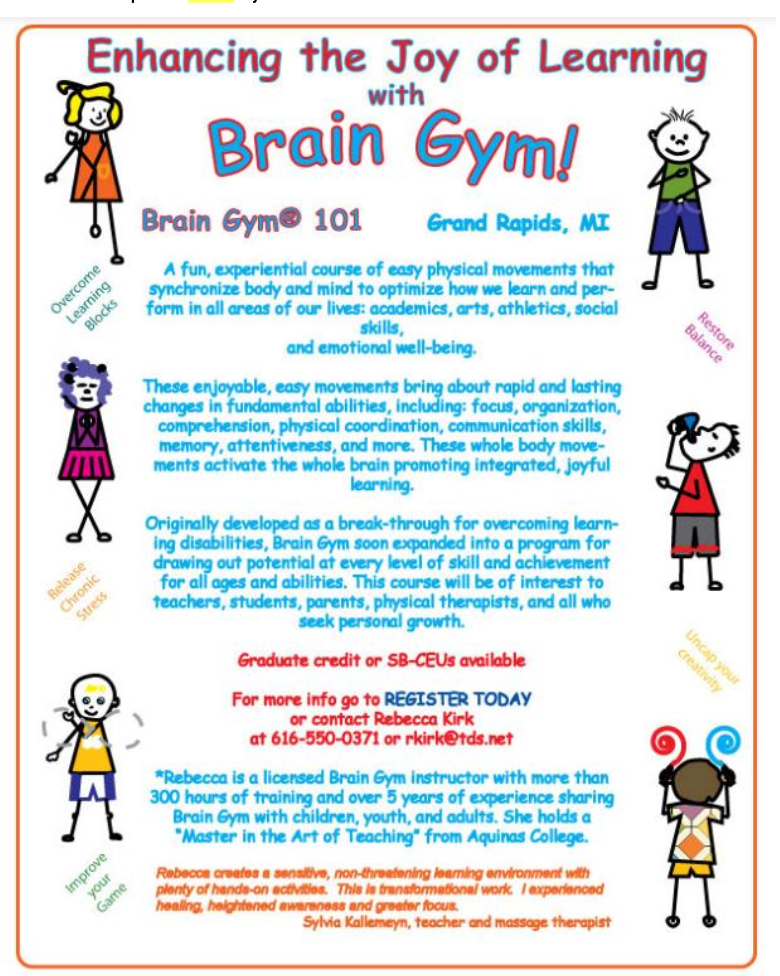
Text Type: This text is a promotional flyer about the “Brain Gym® 101” course and its benefits for improving learning and overall performance, commenting on the connection between physical movement and cognitive, emotional, and academic development. Target Audience: It is targeted at teachers, parents, therapists, students, and individuals seeking personal growth, Beliefs & Values: specifically those who want to overcome learning challenges or enhance educational outcomes. Purpose: The purpose is to persuade readers to sign up for the Brain Gym course by presenting it as an enjoyable, effective, and professionally credible program that produces meaningful results. Thesis: Through the strategic interplay of enthusiastic language and bright, childlike visual elements, the flyer constructs Brain Gym as both scientifically grounded and emotionally appealing, thereby encouraging its target audience, teachers, parents, therapists, and individuals interested in personal growth, to sign up.
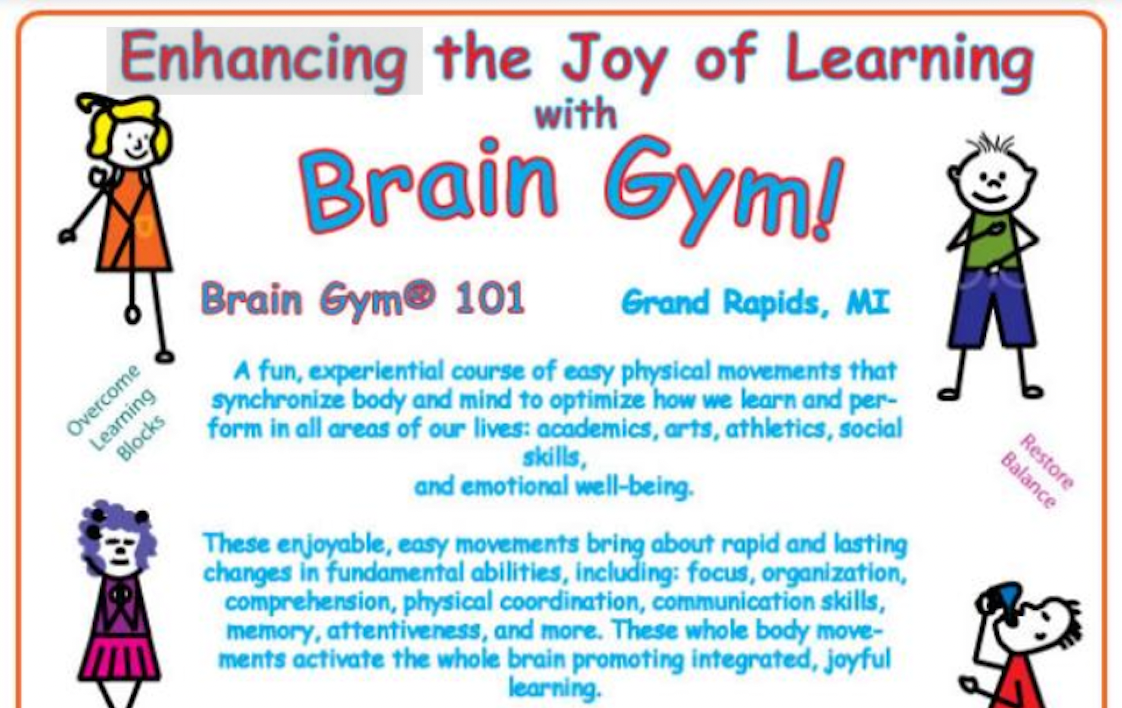
Topic: The headline demonstrates how language and visual features work together to persuade the reader to sign up for Brain Gym by combining aspirational wording with playful design. Analysis: The phrase “Enhancing the Joy of Learning” establishes a positive and uplifting tone, while the verb “Enhancing” implies improvement rather than remediation, appealing to readers who seek growth. The large, rounded, colourful font of “Brain Gym!” visually reinforces this sense of fun and accessibility. Interpretation: By aligning enthusiastic diction with informal typography, the flyer presents the course as enjoyable and unintimidating, shaping the perception that Brain Gym offers an uplifting alternative to traditional academic interventions. Evaluation: This strategic pairing reassures parents and educators that the program will enrich rather than stigmatize learners, making it especially persuasive for an audience wary of remedial labels and more inclined toward opportunities framed as positive development.
Topic: The body text further shows how language and layout combine to persuade readers by presenting detailed benefits within a clear and structured visual format. Analysis: Phrases such as “fun, experiential course,” “easy physical movements,” and “rapid and lasting changes” foreground effectiveness, while the extensive list of improvements, “focus, organisation, comprehension, physical coordination, communication skills, memory, attentiveness”, appeals logically through specificity. Also, the compact, centered paragraphs visually reinforce clarity and order. Interpretation: The orderly layout mirrors the qualities of “organization” and “focus” that the program claims to develop, reinforcing the credibility of the promised outcomes through visual structure. Evaluation: By combining specific, outcome-based language with a visually structured presentation, the flyer strategically appeals to educators and parents who value measurable improvement, increasing the likelihood that they will see the course as a practical and results-oriented investment.
Topic: The flyer also combines language and visual organisation to establish credibility and persuade readers that Brain Gym is professionally legitimate. Analysis: References to a “break-through for overcoming learning disabilities,” the availability of “Graduate credit or SB-CEUs,” and Rebecca’s qualifications, “licensed Brain Gym instructor” with extensive training and a “Master in the Art of Teaching”, appeal to reason. This information is visually separated at the bottom of the flyer, resembling a formal endorsement. Interpretation: The placement and detail of these credentials position the program as authoritative and trustworthy, particularly for educators seeking recognised professional development. Evaluation: This emphasis on qualifications and accreditation strategically targets professionals who require evidence of legitimacy before committing time or funding, strengthening the flyer’s appeal to teachers and therapists who prioritise certified expertise.
Topic: The bright colours, playful stick-figure illustrations, and surrounding benefit statements illustrate how visual features reinforce the persuasive language of transformation and holistic development. Analysis: Reds and blues create an energetic atmosphere, while phrases such as “Overcome Learning Blocks,” “Restore Balance,” and “Improve your Game” frame the page with concise promises. Furthermore, the circular arrangement of images around the text visually suggests integration. Interpretation: These design choices symbolise whole-body and whole-brain learning, visually enacting the program’s core claim that movement enhances cognition. Evaluation: The engaging imagery strengthens the emotional appeal of the text, making the flyer memorable and appealing to parents and educators who value both creativity and effectiveness.
Analysis: Finally, the flyer integrates imperative language and visual emphasis in its call to action to directly persuade readers to register. The capitalised and brightly coloured “REGISTER TODAY” stands out prominently and is placed near the contact details. Interpretation: This combination of urgent wording and strategic placement guides the reader from interest to immediate action. Evaluation: By using a bold imperative and visually isolating it from the surrounding text, the flyer strategically reduces hesitation and creates a sense of urgency, prompting the target audience to act while their positive emotional and logical impressions are still fresh. This final directive effectively converts persuasion into commitment, maximising the likelihood of enrollment.
Overall, Brain Gym’s flyer is highly effective in persuading its audience to sign up because of its cohesive integration of enthusiastic, benefit-driven language with bright, playful visual design; however, its heavy reliance on overwhelmingly positive claims and limited concrete evidence may cause more skeptical readers to question the depth of its scientific credibility.