IB English Paper 1 — Analysing an Advertisement (paragraph framework)
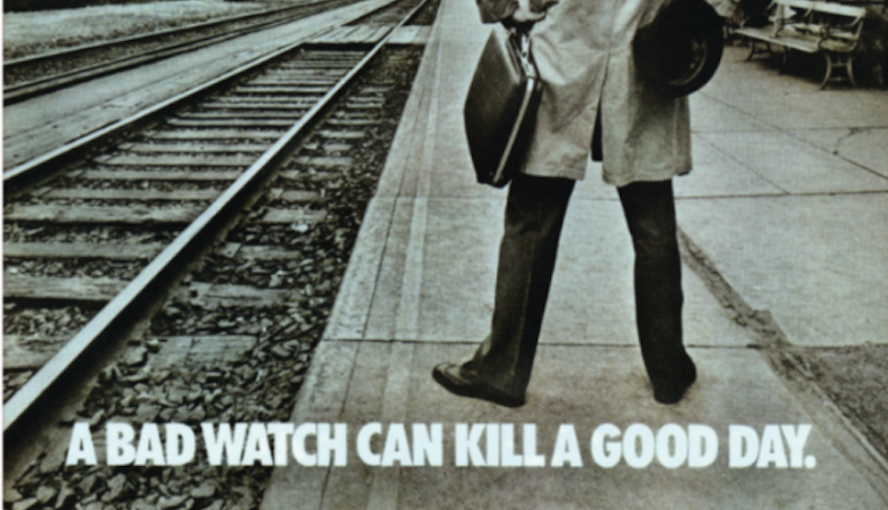
- How do language and visual elements work together to persuade people to buy this brand of watch?
[Text Type] This text is a 1973 print advertisement for the Bulova Accutron watch, [message] commenting on the importance of punctuality and professional success in a competitive corporate society. [Target Audience] It is targeted at middle‑class male professionals, [Beliefs and Values] specifically those who value career advancement, financial stability, and social status. [Purpose] The purpose is to persuade this audience to purchase the Bulova Accutron by demonstrating that accurate timekeeping is directly linked to professional achievement. [Thesis – answers the guiding question] This aim is accomplished through the combined use of symbolic visual imagery and emotive, logical, and technical language, which work together to present the watch as both a safeguard against failure and a symbol of masculine success.
[Topic] The opening image and headline work together to create fear and urgency through symbolism and emotive language. Evidence: The businessman stands on the platform while the train disappears into the distance. Analysis: The image captures the exact moment of the missed departure. Interpretation: The departing train symbolises missed opportunities and the irreversible nature of time. Evaluation: This symbolic image immediately creates anxiety through an appeal to fear, prompting the reader to fear similar failure. Evidence: The man’s coat and briefcase visually establish him as a serious professional. Analysis: His attire reflects corporate identity and social status. Interpretation: This suggests that punctuality is directly linked to professional credibility and masculine success. Evaluation: By presenting a relatable working man, the advertisement appeals to ambition and reinforces middle‑class professional values. Evidence: The headline, “A BAD WATCH CAN KILL A GOOD DAY,” is written in large capital letters. Analysis: The bold typography dominates the visual space and demands attention. Interpretation: This suggests that the issue of timekeeping is urgent and potentially catastrophic. Evaluation: The visual dominance of the headline ensures the warning cannot be ignored. Evidence: Furthermore, the word “kill” is hyperbolic. Analysis: It exaggerates the consequences of inaccuracy. Interpretation: This implies that even a small mechanical flaw can destroy significant professional opportunities. Evaluation: The dramatic exaggeration heightens fear and frames timekeeping as a life‑defining issue. Overall Evaluation: Together, the visual symbolism and emotive language construct a powerful warning that lateness equals failure. For the target audience, this creates personal anxiety about reliability and reputation. Socially, the advertisement reflects a culture that equates punctuality with moral responsibility and professional worth, reinforcing the pressure to succeed in a competitive, time‑driven society.
[Topic] The body copy and layout combine appeals to logic and contrast to present lateness as a chain reaction of failure. Evidence: The advertisement includes the exact train time of 8:02. Analysis: The specificity mirrors the product’s promise of measurable accuracy. Interpretation: This suggests that even a minor deviation in time can produce serious professional consequences. Evaluation: This realistic detail strengthens the logical appeal by making the scenario believable. Evidence: The text outlines a clear progression: catch the train, attend the meeting, sign the contract, receive praise. Analysis: This cause‑and‑effect structure logically connects punctuality to career success. Interpretation: It implies that professional advancement depends on precise time management. Evaluation: The logical flow persuades readers that success is not accidental but dependent on reliable timekeeping. Evidence: The repeated conditional “you’d be” contrasts sharply with “unfortunately, you’re not.” Analysis: This juxtaposition highlights the gap between imagined success and present failure. Interpretation: It suggests that the reader’s potential success is within reach but easily lost through small errors. Evaluation: This intensifies regret and reinforces the consequences of inaccuracy. Evidence: Lastly, the explanatory paragraph sits directly below the image of the missed train. Analysis: The placement visually connects the problem to its explanation. Interpretation: This layout suggests that the failure shown in the image is logically explained by the faulty watch. Evaluation: By guiding the reader from emotional reaction to rational explanation, the advertisement strengthens its persuasive impact. Overall Evaluation: By combining logical reasoning with visual reinforcement, the advertisement convinces readers that punctuality determines professional destiny. The impact on the audience is both rational and emotional: they are shown exactly how failure unfolds. Socially, the advertisement comments on a results‑driven culture where productivity and career success define identity, suggesting that time is not merely practical but symbolic of personal worth.
[Topic] The technical language and product image present the watch as superior and desirable. Evidence: The advertisement includes a measurable performance guarantee: “within a minute a month.” Analysis: The statistic provides quantifiable proof of precision. Interpretation: This suggests scientific authority and mechanical superiority over ordinary watches. Evaluation: The guarantee reassures consumers and reduces uncertainty about the purchase. Evidence: The phrase “The faithful tuning fork watch.” Analysis: “Faithful” personifies the watch, while “tuning fork” is technical jargon. Interpretation: This suggests the product is both emotionally dependable and technologically advanced. Evaluation: Together, this dual appeal strengthens trust in the brand and emphasises innovation. Evidence: The polished gold watch is displayed prominently at the bottom of the advertisement. Analysis: The gold colouring is visually striking and luxurious. Interpretation: Gold symbolises wealth, prestige, and professional success. Evaluation: This makes the product aspirational and desirable. Evidence: Finally, the advertisement lists specific models and prices. Analysis: Furthermore, the inclusion of concrete details creates transparency. Interpretation: This suggests confidence in the product’s value and accessibility to the target audience. Evaluation: The practical information grounds the emotional appeal in realism, increasing purchase likelihood. Overall Evaluation: Through technical credibility and aspirational imagery, the advertisement positions the watch as both a practical solution and a status symbol. For readers, this creates reassurance and desire, they are not only buying accuracy, but success itself. Socially, the advertisement reflects consumer culture in which technology and luxury goods promise upward mobility, reinforcing the belief that professional achievement can be secured through material investment.
[Effectiveness] This text effectively persuades its audience to consider purchasing the Bulova Accutron watch through its use of emotive language and symbolic visual imagery by presenting punctuality as essential to professional success and the watch as a reliable safeguard against failure. [Ineffectiveness] However, its emphasis on career anxiety may dissuade some members of the target audience, particularly those who do not prioritise corporate ambition, who may feel that measuring personal worth through productivity is not necessary or meaningful for them.