Anatomy of a Comparative Paragraph: Paper 2 Essay Structure
Essay Question
-How do two works you’ve studied present the bad side of a good character?
Essay
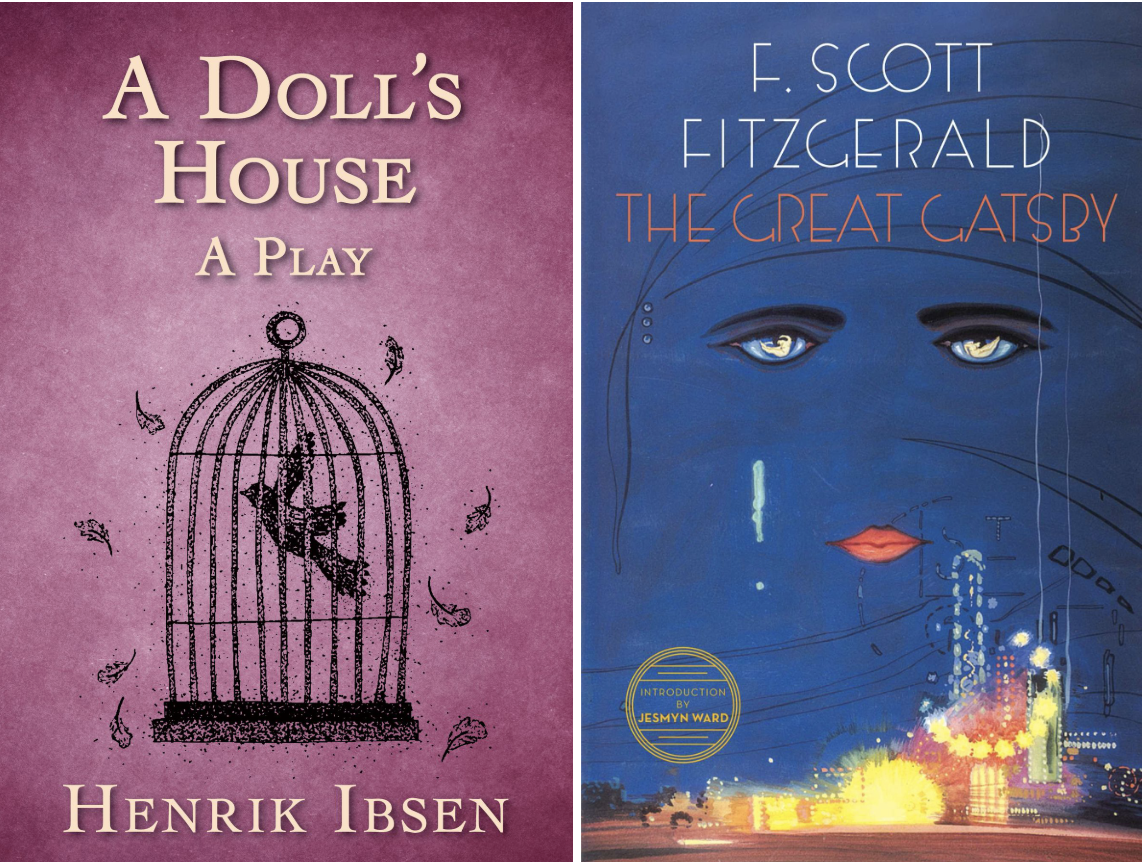
[HOOK] What does it really mean to be a “good” person? Is goodness about appearing loving and respectable, or is it about honesty and truth? In literature, characters often seem moral and admirable at first, but their goodness can be built on illusion. [TEXTS] Both The Great Gatsby by F. Scott Fitzgerald and A Doll’s House by Henrik Ibsen explore what happens when the image of a “good” person begins to fall apart. In both texts, characters appear loving and respectable at first. However, as the stories develop, we see that this goodness is based on performance. [THESIS] Through false first impressions, moments of crisis, and very different endings, both authors reveal hidden truths, but they ultimately send different messages about what happens after illusion is exposed.
[POINT] From the beginning, both authors suggest that goodness is not as stable as it seems and is often based on performance. [ZOOM IN] In The Great Gatsby, Nick describes Gatsby as having “an extraordinary gift for hope” and says there was “something gorgeous about him.” [ZOOM IN FURTHER] However, Nick also says that “foul dust floated in the wake of his dreams.” The metaphor of “foul dust” introduces corruption beneath the beauty of Gatsby’s dream, suggesting that darkness follows his idealism. Fitzgerald’s use of retrospective first‑person narration allows Nick to admire Gatsby while also foreshadowing his failure, creating tension between appearance and reality. [ZOOM OUT] Because the story is told after Gatsby’s death, Fitzgerald structurally frames Gatsby’s goodness as fragile from the outset, encouraging readers to question it. [ZOOM OUT FURTHER] Through symbolism and narrative perspective, Fitzgerald suggests that romantic idealism may look beautiful, but it is often built on unstable or corrupt foundations. [ZOOM IN] Similarly, in A Doll’s House, the Helmer home appears warm and respectable, described in the stage directions as “comfortably and tastefully” furnished. [ZOOM IN FURTHER] Yet Helmer calls Nora “my little lark” and “my little squirrel,” diminishing her status through infantilising language. He also claims that “no debt, no borrowing” is necessary for a happy home, while the audience already knows Nora has secretly borrowed money. Ibsen’s use of dramatic irony and detailed stage directions exposes the gap between appearance and truth. [ZOOM OUT] The carefully constructed domestic setting becomes a theatrical space where respectability is performed. [ZOOM OUT FURTHER] Through realism and stagecraft, Ibsen suggests that social ideas of goodness are roles shaped by societal expectations rather than authentic morality. [COMPARISON] While Fitzgerald uses retrospective narration and symbolism to present goodness as a self-created performance sustaining romantic illusion, Ibsen uses dramatic irony and stage realism to present goodness as a socially imposed performance, showing that in both texts moral virtue is unstable because it depends on acting a role rather than revealing truth.
[POINT] The turning points in both texts reveal that the characters’ apparent goodness is not genuine, but a performance that collapses under pressure. [ZOOM IN] In The Great Gatsby, during the argument in the Plaza Hotel, Gatsby demands that Daisy say she never loved Tom. [ZOOM IN FURTHER] When Daisy admits, “I did love him once, but I loved you too,” Gatsby repeats, “You loved me TOO?” Fitzgerald’s use of dialogue and repetition emphasises Gatsby’s desperation and inability to accept complexity. His identity depends on rewriting the past into something morally perfect. [ZOOM OUT] By placing this confrontation at the structural climax of the novel, Fitzgerald deliberately dismantles the illusion of Gatsby as a devoted romantic hero. [ZOOM OUT FURTHER] Through dramatic confrontation and the collapse of Gatsby’s dream, Fitzgerald reveals that the performance of ideal love cannot survive reality. [ZOOM IN] Similarly, in A Doll’s House, Helmer’s image of moral goodness is exposed when he reads Krogstad’s letter. [ZOOM IN FURTHER] Instead of thanking Nora, he calls her a “miserable creature” and fears he is “in the power of an unscrupulous man.” When the danger passes, he quickly states, “I have forgiven you everything.” Ibsen’s sharp tonal shift in dialogue exposes Helmer’s conditional morality. [ZOOM OUT] The letter functions as a dramatic device that forces truth into the domestic space, exposing the moral hypocrisy beneath the domestic ideal. [ZOOM OUT FURTHER] Through climactic revelation and realistic dialogue, Ibsen critiques traditional ideals of honour that prioritise reputation over genuine integrity. [COMPARISION] Comparatively, Fitzgerald uses symbolic confrontation and narrative structure to show Gatsby’s goodness as a personal romantic performance, while Ibsen uses dramatic devices and stage realism to expose Helmer’s goodness as a social performance, revealing that in both texts the collapse of moral façade uncovers the bad side of those who appear morally admirable.
[POINT] Although both authors expose false goodness, their endings present very different messages about what happens after the performance collapses. [ZOOM IN] In The Great Gatsby, Gatsby dies while still waiting for Daisy’s call, suggesting that he never abandons his dream. [ZOOM IN FURTHER] The novel ends with, “So we beat on, boats against the current, borne back ceaselessly into the past.” Fitzgerald’s extended metaphor and cyclical imagery create a sense of inevitability and repetition. [ZOOM OUT] Gatsby’s death does not end the illusion; instead, the reflective narrative voice suggests that society continues chasing impossible dreams. [ZOOM OUT FURTHER] Through lyrical language and cyclical structure, Fitzgerald presents illusion as tragic and unavoidable in modern society. [ZOOM IN] In contrast, A Doll’s House ends with Nora leaving her home. [ZOOM IN FURTHER] She declares, “I believe that before all else I am a reasonable human being,” and the play concludes with “the sound of a door shutting.” Ibsen uses this symbolic stage direction as a powerful theatrical gesture of rupture and independence. [ZOOM OUT] Unlike Gatsby, Nora actively rejects the role she has been performing. [ZOOM OUT FURTHER] Through minimalist staging and decisive action, Ibsen suggests that confronting illusion can lead to transformation. [COMPARISON] Whereas Fitzgerald uses cyclical narrative structure and reflective symbolism to show that performed goodness traps individuals in tragic repetition, Ibsen uses dramatic stagecraft and symbolic action to suggest that abandoning constructed virtue makes authentic identity possible.
In conclusion, [HOOK] both Fitzgerald and Ibsen explore the bad side of a “good” person by revealing how goodness can be based on appearance rather than honesty. [SUMMARY] Through moments of crisis, the authors show that when performance replaces truth, hidden flaws inevitably surface. Fitzgerald ultimately presents the collapse of performed goodness as tragic and destructive, while Ibsen presents it as necessary for self-awareness and freedom. [INFORMS THE GLOBAL ISSUE “goodness”] Together, the texts suggest that when societies reward reputation over integrity, individuals are encouraged to construct versions of goodness that conceal, rather than confront, their moral flaws.