Graphic Features in Marjane Satrapi’s Persepolis
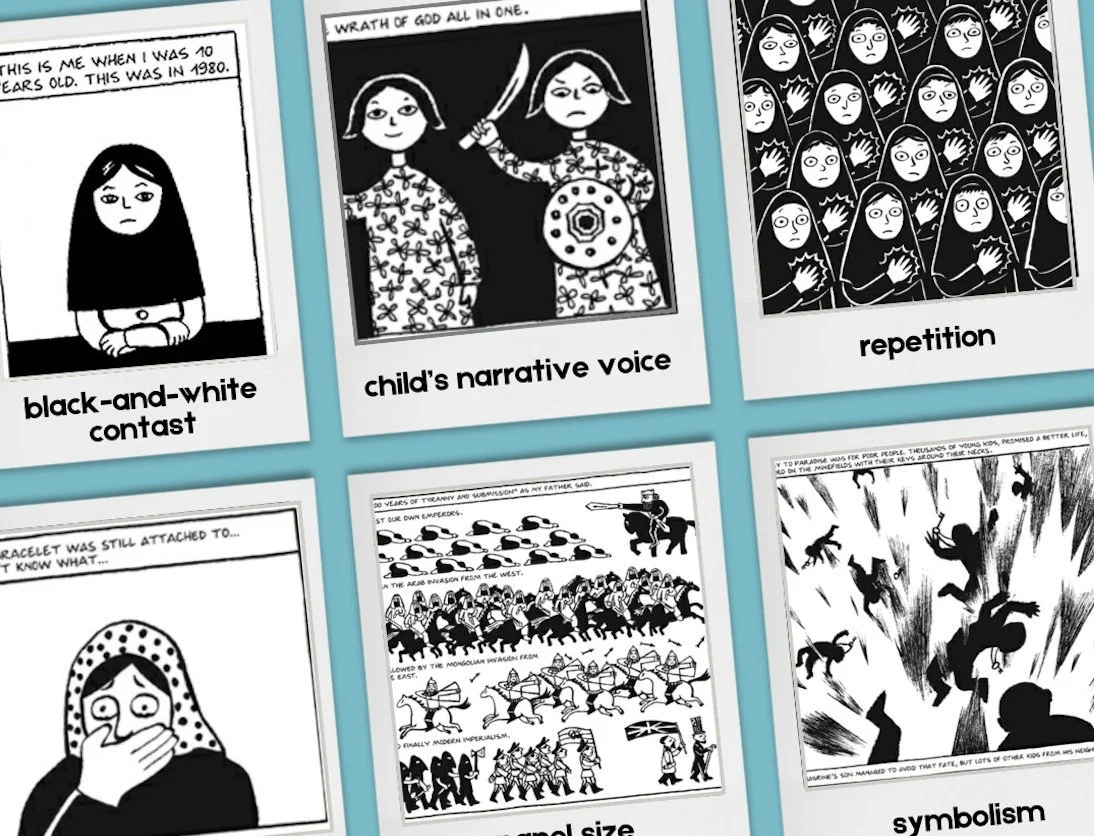
Black-and-White Contrast
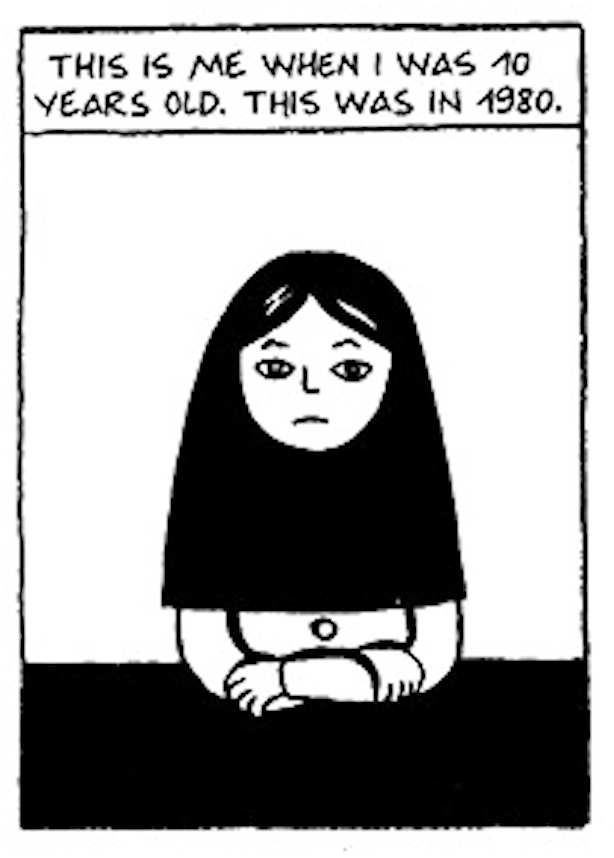
Satrapi intentionally uses black-and-white contrast to mirror the rigid, absolutist thinking of the regime while subtly critiquing it. By visually presenting a world stripped of color and complexity, she exposes how authoritarian systems reduce reality into simplistic binaries and suppress individuality.
Simplified, Cartoon-Like Style
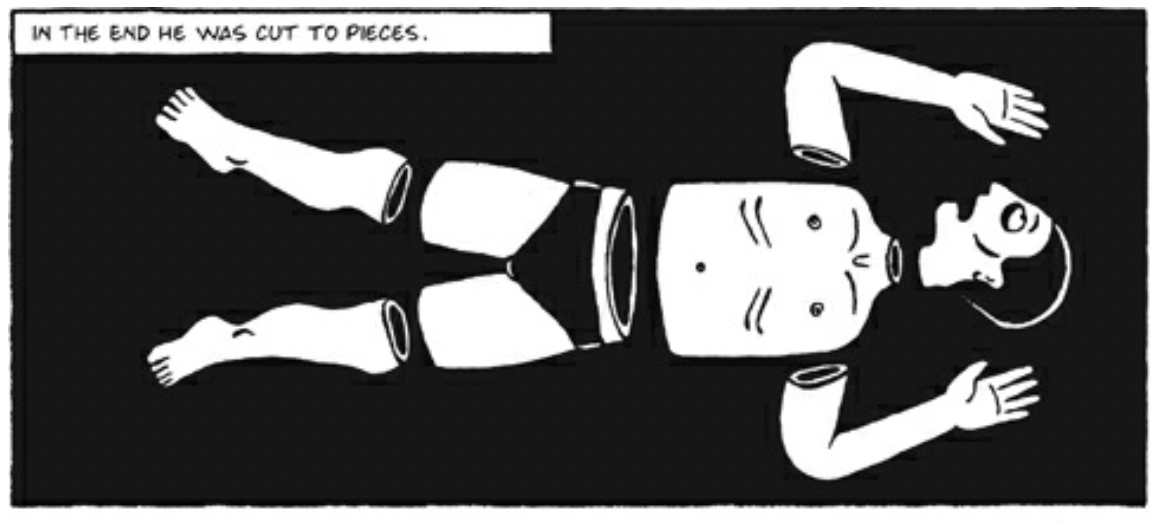
Satrapi deliberately adopts a naïve, simplified style to foreground innocence and vulnerability. This stylistic choice allows her to critique extremism indirectly—by showing how absurd and destructive political ideology appears when filtered through a child’s understanding.
Facial Expressions and Body Language
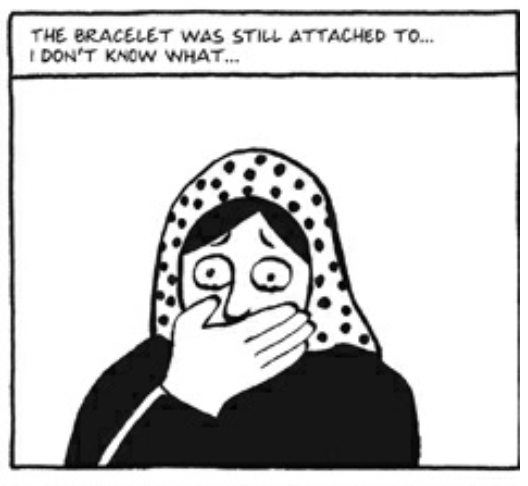
Satrapi uses expressive faces and body language to humanize political events. Her intention is to center personal suffering and emotional truth over political rhetoric, ensuring readers empathize with individuals rather than abstract ideologies.
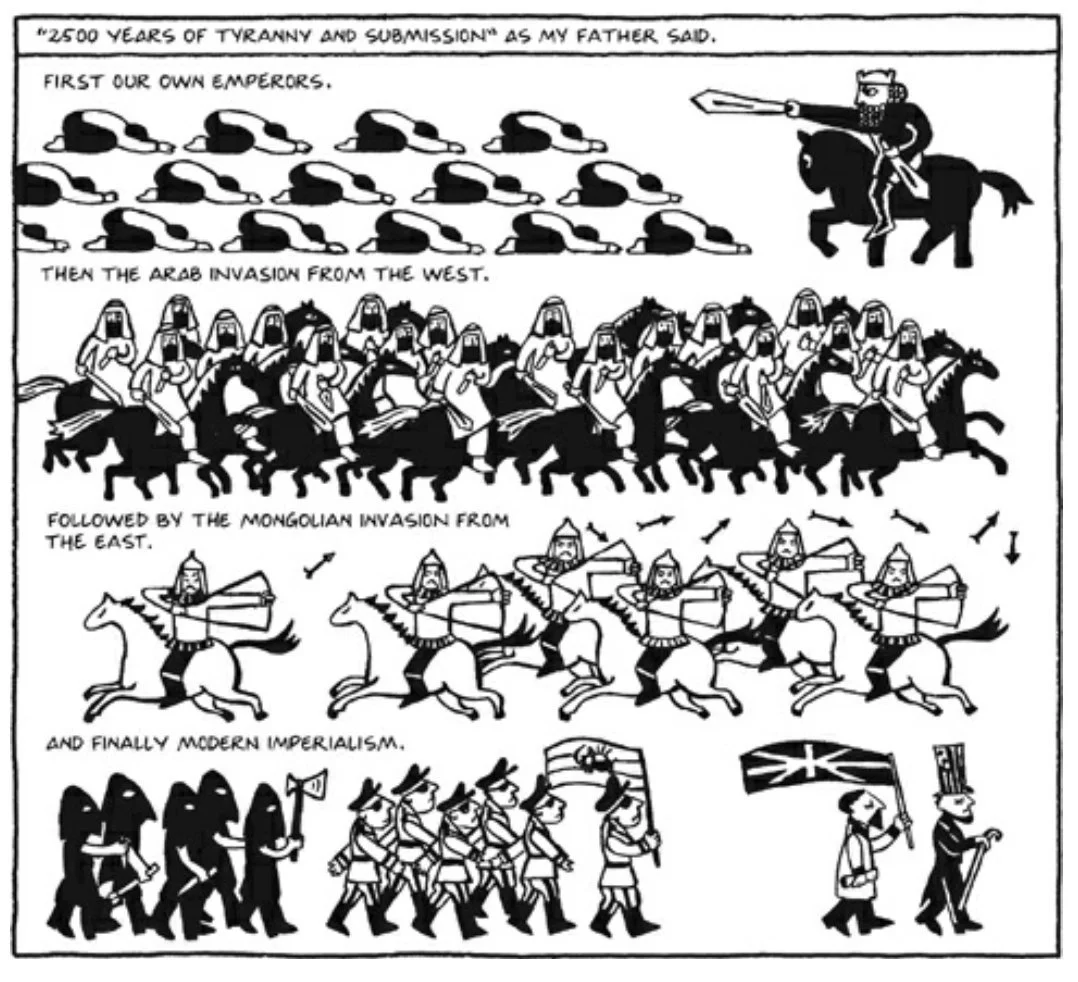
Panel Size and Layout
Satrapi manipulates layout to control the reader’s emotional experience. By enlarging traumatic moments or disrupting structure, she forces readers to pause and confront the impact of war and repression, reinforcing her criticism of their devastating consequences.
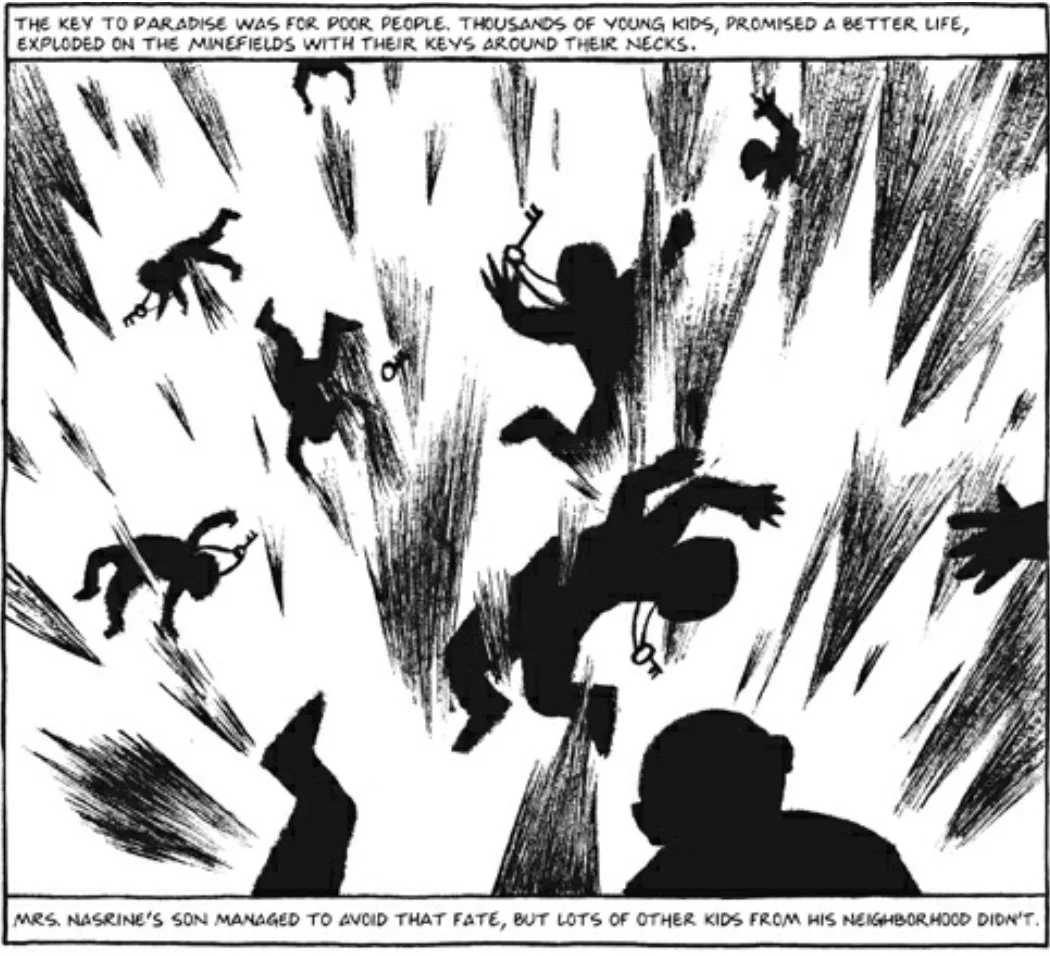
Symbolism
Satrapi employs symbolism to condense complex political critique into striking visual images. Her intention is to reveal how ideology operates through symbols and propaganda, while also reclaiming those symbols to expose their harm.
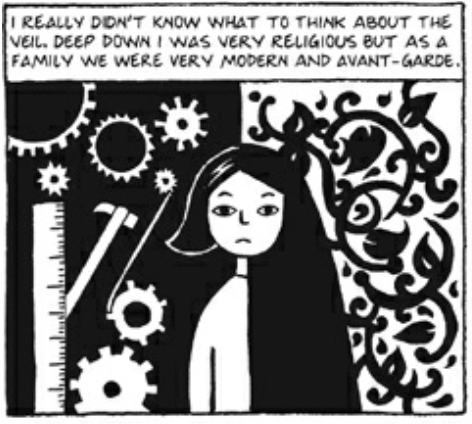
Juxtaposition
Satrapi intentionally creates visual-verbal irony to undermine authority. By contrasting what is said with what is shown, she exposes the hypocrisy of political propaganda and encourages readers to question dominant narratives.
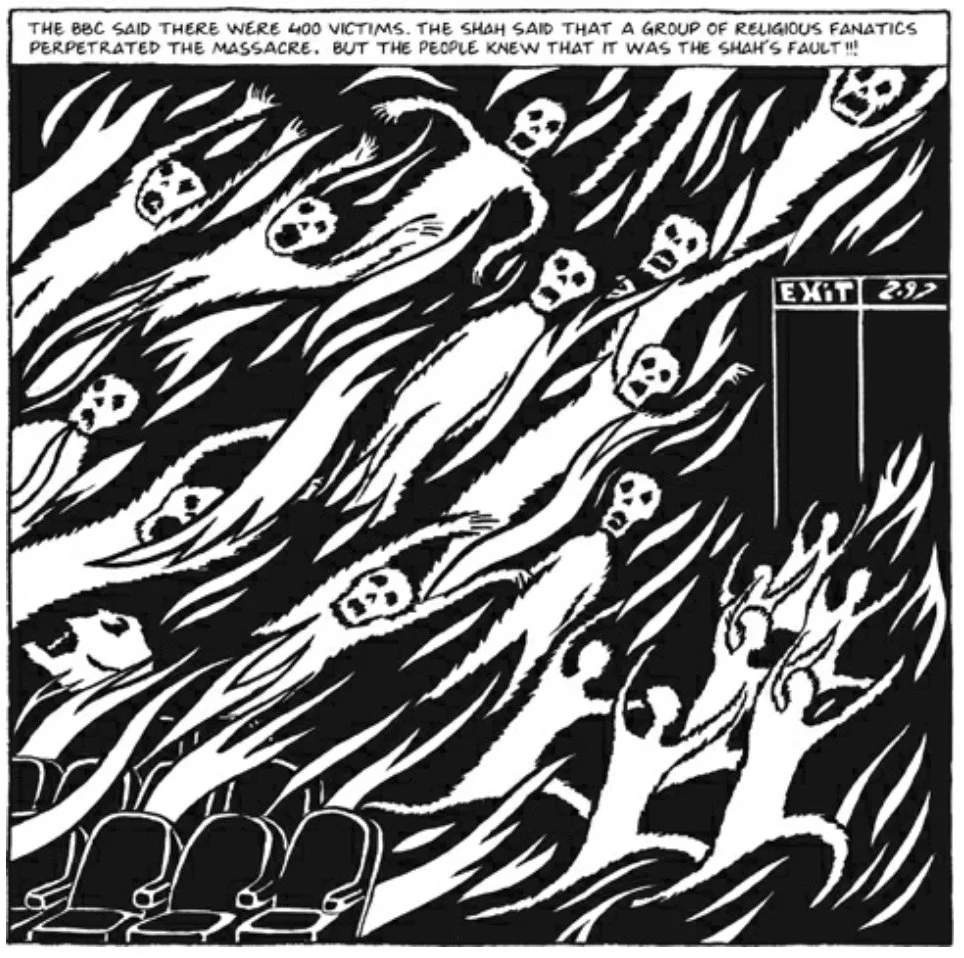
Depiction of violence
Satrapi avoids graphic realism to prevent violence from becoming spectacle. Her intention is to emphasize psychological trauma and moral impact, ensuring readers reflect on suffering rather than consume it as entertainment.
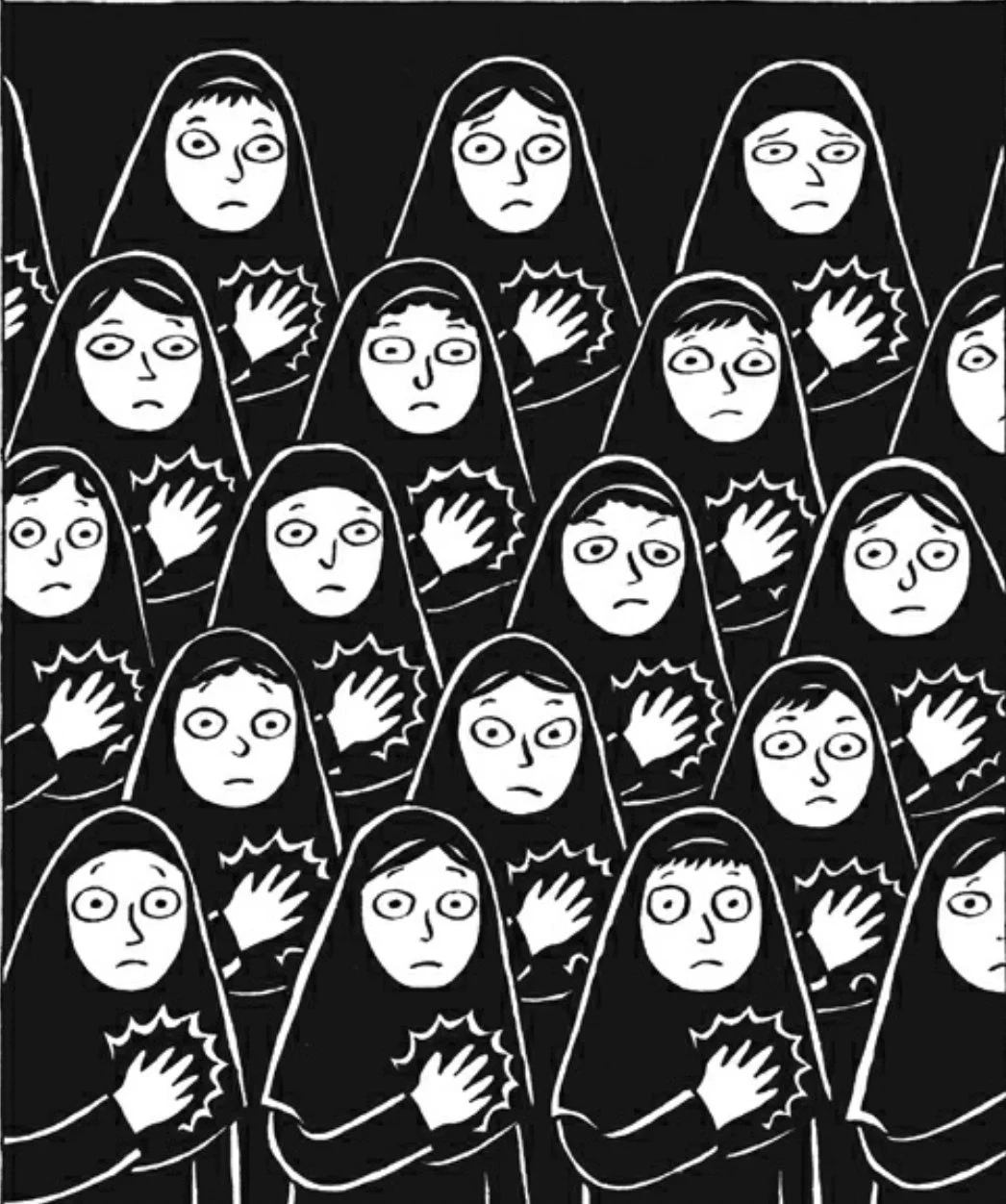
Repetition
Through repetition, Satrapi demonstrates how authoritarian control becomes routine and internalized. Her intention is to show that oppression is not only dramatic but also sustained through everyday practices.
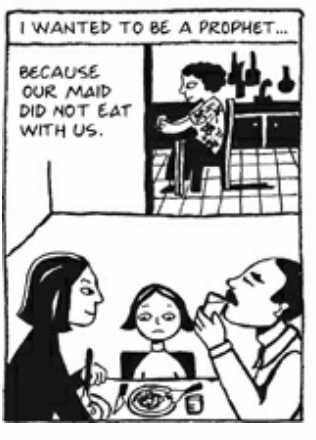
Perspective and Framing
Satrapi carefully frames characters to reflect their psychological and political circumstances. Her intention is to visually represent feelings of confinement, alienation, and vulnerability under repressive systems.
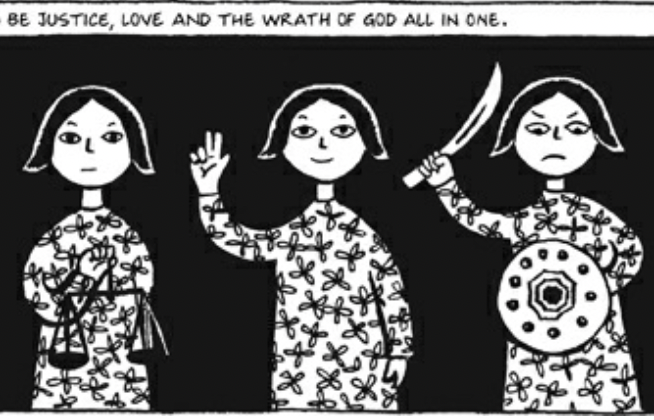
Child’s Narrative Voice
By blending childlike narration with adult hindsight, Satrapi exposes how ideology shapes young minds. Her intention is to critique indoctrination while illustrating the development of independent thought and resistance.