Paper 1: analysing an interview
Paper 1 Practice
My students and I approached this practice paper from the 5 pillars of non-fiction analysis:
• Structure
• Layout
• Visuals
• Language
• Multimodality
The Guiding Question we used was How does the interview shape the portrayal of Pelé?
Each student chose one pillar to analyze. I then combined the responses and used AI to create a unified, consistent register. Here is the result:
Response
This text is a magazine interview about Pelé's life and career, exploring ideas of leadership, fame, and responsibility in sport. Published in a business-focused magazine, it is written for those interested in success and management. The purpose is to present Pelé not only as a football legend, but also as a principled and effective leader. This is achieved through the clear structure of the interview, the purposeful visual layout, the interviewer's respectful and carefully worded questions, and Pelé's own modest yet confident language, which together shape the reader's understanding of him.
The structure of the interview plays an important role in shaping the reader's view of Pelé. It begins by reminding readers of his extraordinary achievements, immediately establishing him as a legendary and authoritative figure in football. However, rather than continuing to focus only on his success, the interviewer quickly shifts to questions about leadership and teamwork. This moves directs attention away from trophies and toward character, encouraging readers to see Pelé not just as a talented athlete, but as a thoughtful individual. As the interview progresses, the questions move from his public career to more personal topics such as retirement, money, endorsements, and finally his private life on his farm. This gradual shift from public to personal makes the portrayal feel more intimate and human. By the time the interview ends with an image of Pelé relaxing in a quiet rural setting, the reader's perception has shifted from global sports icon to grounded, reflective man. The closing focus on simplicity reinforces the idea that, despite his fame, he remains humble and connected to ordinary life. The deliberate sequencing of topics, from achievement to values to personal peace, shapes Pelé as not only successful, but balanced, morally responsible, and authentic.
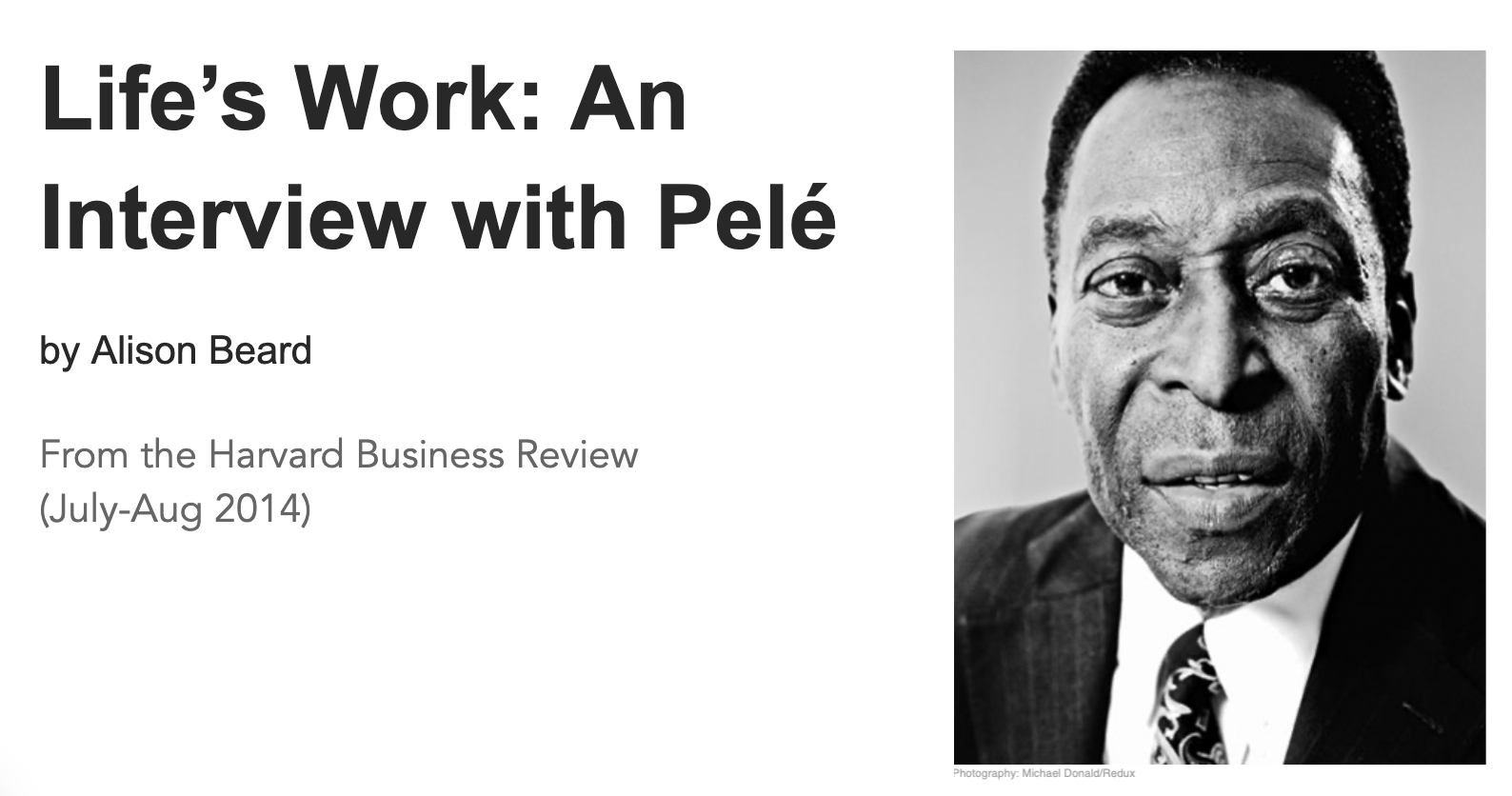
The visual layout strongly shapes how readers understand Pelé before they even begin analyzing his words. The headline and introductory blurb, placed prominently at the top, immediately frame him as a legend by summarising his World Cup victories and long career. By foregrounding his achievements in this way, the layout ensures that the reader approaches the interview with a sense of his authority and importance already established. The large photograph, positioned centrally and taking up significant space on the page, further elevates his status within the layout. Its size gives him visual dominance, signaling that he is the central and significant figure of the text before any dialogue begins. The clear question‑and‑answer format then separates the interviewer's voice from Pelé's, allowing his responses to stand independently. This visual separation makes his voice appear direct and authentic, strengthening his credibility. The short paragraphs and generous white space make his answers seem calm and measured rather than overwhelming, reinforcing an image of composure and humility. The distinct presentation of the questions also guides the reader through key themes such as leadership, money, and morality, positioning Pelé as someone thoughtfully responding to serious issues. Finally, the loose chronological progression, from early success to retirement and later life, visually suggests a complete and accomplished life journey. The layout establishes his authority immediately, creates a sense of authenticity, and frames him as reflective, respected, and grounded.
The photograph shapes our understanding of Pelé by presenting him as reflective and dignified rather than as an action‑focused sports star. The close‑up framing draws attention to his face, encouraging readers to focus on his character instead of his physical ability. His direct eye contact creates a sense of honesty and connection, making him seem open and sincere. The fact that he is wearing a suit and tie, rather than sportswear, presents him as professional and statesman‑like, elevating him beyond the identity of an athlete. The black‑and‑white style adds a timeless quality, reinforcing the idea that his legacy extends beyond a single era. In addition, visible signs of age emphasize experience and wisdom, supporting the reflective tone of the interview. The photo presents Pelé as mature, composed, and respected, aligning with the portrayal of him as a thoughtful and enduring public figure.
The interviewer's language plays an important role in shaping how Pelé is portrayed. In the introduction, he is described as a “sports legend” who led Brazil to multiple victories, which immediately establishes him as exceptional and authoritative. The interviewer also makes strong declarative statements, such as “You were the star of all your teams,” treating his greatness as an accepted fact rather than something to question. This reinforces his status and positions him as naturally influential. Throughout the interview, the tone of the questions remains respectful and serious, which suggests that Pelé is a figure worthy of thoughtful discussion. The interviewer also raises ethical topics, such as high salaries and brand endorsements, giving Pelé the opportunity to express his values and present himself as morally responsible. At the same time, questions about retirement and adjustment invite reflection, making him appear honest and human. Through careful wording, respectful tone, and strategic topic choices, the interviewer's language shapes Pelé as a respected, reflective, and principled public figure.
Pelé's own language strongly shapes how readers understand him. He frequently uses the first person, with phrases such as “I never wanted” and “I just tried,” which makes his responses feel personal and direct. However, even when speaking about his success, he uses modest phrasing, saying leadership “came naturally” rather than claiming it for himself. This downplays his authority and presents him as humble. He also emphasizes teamwork, stating that “we have to play as a team,” which shifts attention away from individual glory and shows that he values collaboration. His language is simple and conversational, which makes him seem grounded and sincere rather than boastful. At the same time, when discussing moral issues like endorsements, he uses firm and clear statements such as “I'm never going to endorse those brands,” showing strong principles and conviction. He also expresses gratitude, suggesting that his success is not entirely self-made. Through modest wording, clear statements, and a reflective tone, Pelé's language presents him as humble, principled, and thoughtful.
The multimodal elements of the text work together effectively to shape our understanding of Pelé as both a legend and a principled leader. The bold headline and introductory blurb immediately establish his achievements, framing him as an authoritative and respected figure before he even speaks. The large, formal photograph reinforces this importance by giving him visual dominance on the page, while also presenting him as mature and composed. The clear question‑and‑answer format highlights his voice, making his responses feel direct and authentic. At the same time, the clean layout, short paragraphs, and generous white space create a calm and controlled tone that mirrors his modest language. Together, the visual design and written content reinforce one another, effectively presenting Pelé not just as a famous athlete, but as a thoughtful, ethical, and reflective role model.
Overall, the text effectively presents Pelé as more than a football legend. Through its clear structure, respectful tone, visual emphasis, and Pelé's own modest and principled language, the interview shapes him as reflective, humble, and morally grounded. By combining these elements, the text successfully reinforces its purpose and leaves readers with a strong impression of Pelé as both an icon and a role model.