Multiple Audiences — Paper 1 Analysis of an Istanbul Travel Article
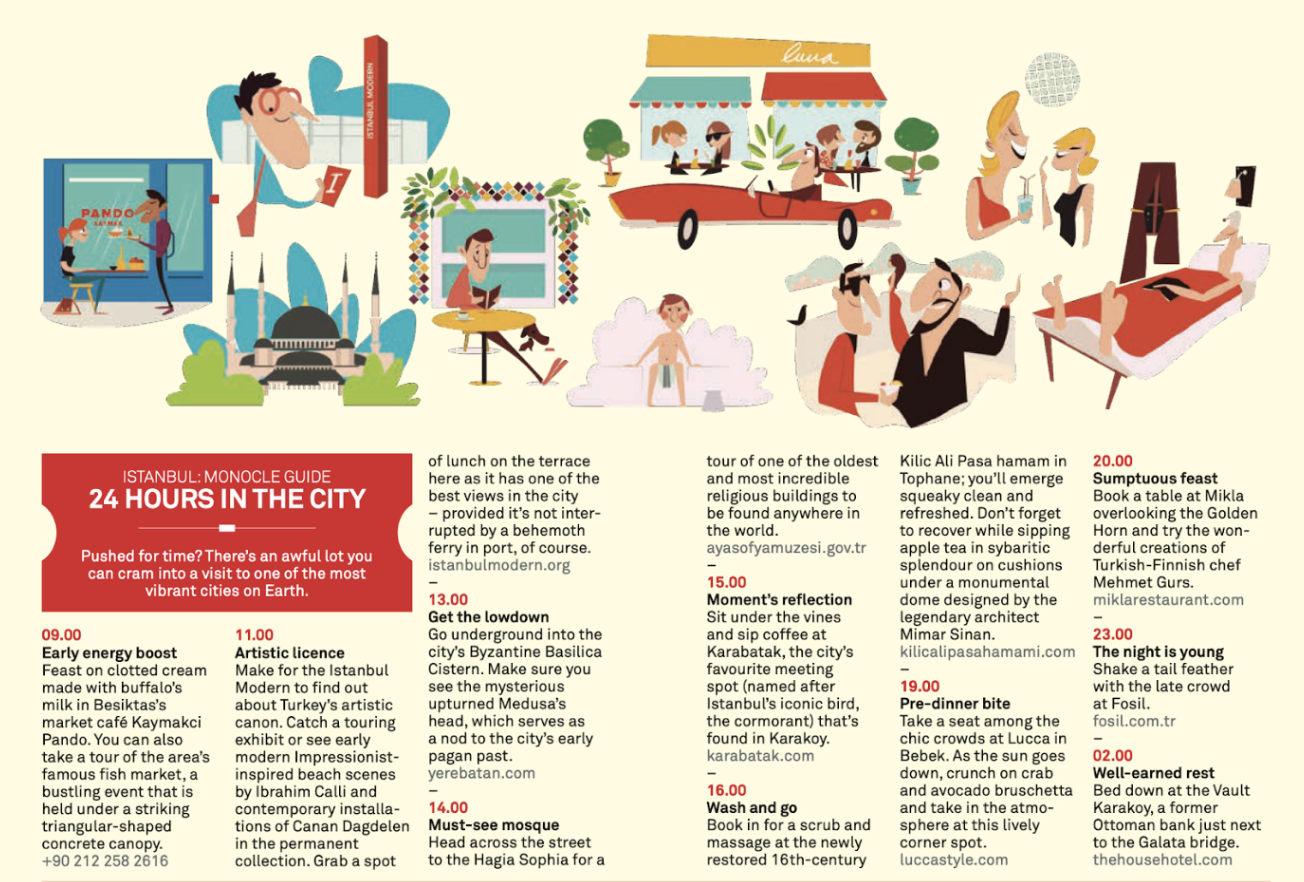
From A Unique Monocle Guide to Istanbul, co-produced by Turkish Airlines and Monocle magazine (April 2014)
Multiple Audiences
Here is a clear list of the multiple audiences the article targets:
Time‑poor professionals / business travellers
– Readers visiting for a short stay who need an efficient, structured itinerary.Affluent / aspirational travellers
– Design‑conscious, upper‑middle‑class readers aligned with Monocle’s sophisticated brand.Cultural and history enthusiasts
– Readers interested in architecture, heritage, and historical landmarks.Food enthusiasts / culinary tourists
– Travellers motivated by gastronomy and sensory experiences.Young / lifestyle‑driven travellers
– Readers attracted to nightlife, social scenes, and vibrant city energy.Independent / tech‑savvy travellers
– Self‑planning tourists who value website links and practical information.First‑time visitors to Istanbul
– Readers unfamiliar with the city who need guidance and curated recommendations.Global cosmopolitan readers
– International audiences who value curated urban experiences and cultural capital.
Essay
The travel article “24 Hours in the City” from A Unique Monocle Guide to Istanbul constructs Istanbul as a curated, vibrant and culturally sophisticated destination. Co‑produced by Turkish Airlines and Monocle magazine, the text is clearly promotional; however, it avoids overt advertising through its refined structure, minimalist layout, stylised visuals and elevated yet accessible language. The article broadens its persuasive reach by targeting distinct audiences: time‑poor professionals, affluent aspirational travellers, cultural enthusiasts, and lifestyle‑driven younger travellers. Each group is addressed through deliberate multimodal choices.
The article strongly appeals to business travellers and short‑stay tourists through its chronological “24 hours” structure. Organised hour‑by‑hour from 09:00 until 02:00, the itinerary presents Istanbul as manageable and efficiently navigable. This structure reduces the potential anxiety of planning a visit to a vast and historically dense city. By providing a ready‑made schedule, the article removes the burden of research, directly appealing to readers who value convenience and organisation. The layout reinforces this practicality. Bold red time markers clearly separate each activity, enabling readers to skim and prioritise. The concise paragraph format mirrors the efficiency associated with professional life. Furthermore, the inclusion of website addresses beneath venues increases the guide’s functional appeal, allowing readers to act immediately. The effect is to position the article not merely as inspirational reading but as a usable tool, enhancing its credibility among pragmatic audiences.
The article also targets Monocle’s typical readership: affluent, globally mobile professionals. The minimalist layout, clean spacing, balanced columns, and refined typography, reflects a high‑end magazine aesthetic. This visual restraint signals exclusivity and taste. Rather than overwhelming readers with dense information, the design implies careful curation, suggesting that each location is elite and worth visiting. Language further reinforces this appeal. Phrases such as “lavish splendour” and references to a “restored 16th‑century” hammam elevate the tone. The mention of figures like “Mimar Sinan” introduces cultural capital, appealing to educated readers who value architectural and historical prestige. This sophisticated diction aligns Istanbul with refinement and intellectual depth, positioning it as a destination suitable for discerning travellers. The cumulative effect is aspirational: readers are invited to imagine themselves participating in a cultured, stylish lifestyle.
For culturally curious audiences, the article integrates significant historical landmarks into the daily schedule. Sites such as the Hagia Sophia and the Basilica Cistern are woven naturally into the itinerary, suggesting that cultural immersion is an essential part of the Istanbul experience. Structurally, these landmarks are positioned in the middle of the day, giving them prominence and importance. The language surrounding these sites is respectful and informative, avoiding slang or trivialisation. Proper nouns and architectural references create authenticity and signal insider knowledge. Visually, the stylised illustrations of mosques and domes reinforce the city’s rich heritage. The effect is to present Istanbul not simply as a leisure destination but as a centre of civilisation and history, appealing to readers who prioritise intellectual enrichment in travel.
Simultaneously, the article appeals to younger or socially motivated travellers. The inclusion of nightlife extending until 02:00 suggests vibrancy and modern energy. By structuring the day to culminate in late‑night socialising, the article portrays Istanbul as dynamic and cosmopolitan rather than static or museum‑like. The visuals play a key role here. The bright, playful illustrations create warmth and accessibility, avoiding the seriousness often associated with historical travel guides. Scenes of people dining, relaxing, and conversing emphasise sociability. The language adopts an engaging tone through imperatives such as “Take a seat” and “Head across the street,” which feel conversational rather than formal. The effect is to make the city appear lively and welcoming, appealing to readers who value experience, atmosphere and social interaction.
Across all audience groups, the article repeatedly foregrounds food, suggesting another key target demographic: culinary travellers. From breakfast through dinner and late‑night drinks, gastronomy structures the day. Sensory language such as references to fresh ingredients and atmospheric dining “under a moonlit sky” stimulates the reader’s imagination. By embedding food throughout the schedule, the article suggests that Istanbul’s identity is inseparable from its cuisine. This consistent emphasis broadens the text’s appeal to readers motivated by taste and sensory immersion. The effect is to make the city feel experiential rather than purely observational.
Through its deliberate structural organisation, elegant layout, vibrant visuals and carefully balanced language, the article successfully addresses multiple distinct audiences. Time‑poor professionals are reassured by clarity and efficiency; affluent readers are attracted by sophistication and exclusivity; cultural enthusiasts are engaged through historical depth; and younger lifestyle travellers are enticed by energy and sociability. By layering these appeals, the article constructs Istanbul as a destination that is organised yet exciting, historic yet contemporary, and refined yet accessible. This strategic multimodal design ensures the guide resonates with a wide spectrum of readers while maintaining its aspirational tone.