How Text Type Itself Persuades: A Paper 1 Strategy for IB English LangLit

If you are preparing for the IB English Language & Literature Paper 1, one of the most effective ways to move into the higher bands for Criterion B (Analysis and Evaluation) is to go beyond identifying techniques and start analysing how the text type itself functions as a persuasive device.
Strong candidates don’t just say “the writer uses emotive language” or “the image creates impact.” They ask a more sophisticated question:
Why is this particular text type the best vehicle for this message?
In Paper 1, every unseen text has been carefully chosen. A feature article is not a speech. A podcast is not a manifesto. A photographic PSA works differently from an infographic. The medium shapes the message. The format itself influences how an audience receives, trusts, and responds to ideas.
High‑level analysis recognises that:
A feature article persuades through accessibility and narrative engagement.
A photograph persuades through immediacy and emotional impact.
An infographic persuades by simplifying complexity for efficiency.
A speech persuades through presence, voice, and collective energy.
An open letter persuades by blending intimacy with public visibility.
A report persuades through institutional authority and structure.
When you analyse text type as a persuasive strategy, you demonstrate:
Awareness of audience and purpose
Understanding of form and convention
Evaluation of how meaning is shaped, not just presented
That is exactly what Criterion B rewards.
This guide will walk you through a wide range of common Paper 1 text types — from feature articles and comics to manifestos and documentaries — and show you how to articulate why the format itself strengthens the writer’s message.
Because in IB LangLit, it’s not just what the text says.
It’s why this form says it best.
FEATURE ARTICLE
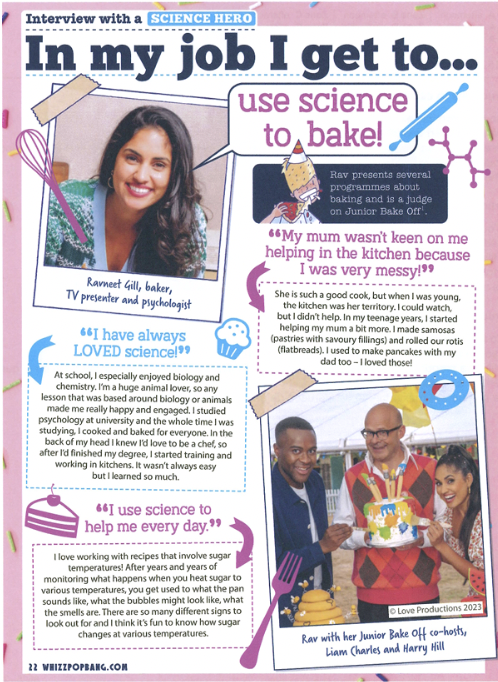
This feature article, published in the British children’s science magazine Whizz Pop Bang, makes science accessible and engaging for young readers.
The article’s purpose is to inspire children to see science as exciting, accessible, and creatively applicable in everyday life.
A feature article is the best vehicle for that message because science as applied to everyday life needs to be accessible and engaging for young readers; the format allows for an informal tone, vivid examples, visual elements, and a narrative style, features that more formal text types lack, making scientific ideas clear, relatable, and inspiring..
Make it stand out
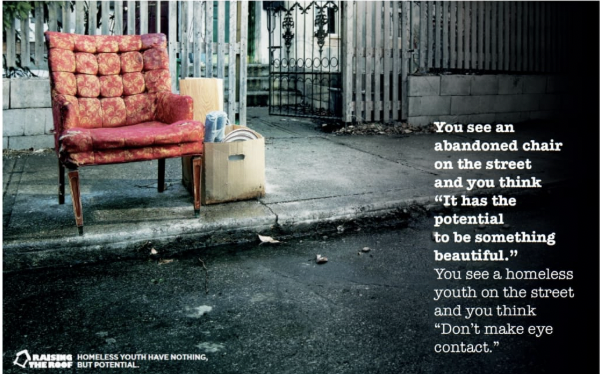
This is a photographic PSA taken from the Raising the Roof website, a Canadian non-profit organisation dedicated to preventing and ending homelessness.
The purpose is to challenge societal attitudes toward homeless youth and persuade viewers to recognise their potential and respond with empathy rather than avoidance.
Photography is the best vehicle because the message relies on the medium’s salient features: immediate visual and emotional impact, emphasising that change must happen now.
INFOGRAPHIC
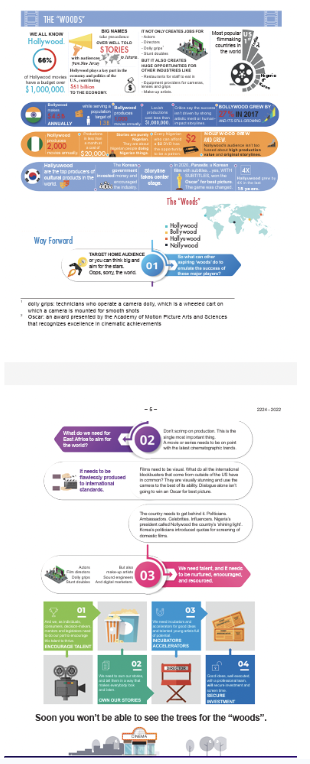
This is an infographic published by the Africa Digital Media Foundation, an organisation that works to create jobs for young people in Africa’s digital economy, and it focuses on investment opportunities in Africa’s digital film industry.
The purpose is to persuade policymakers and investors to recognise the scale, potential, and urgency of investing in emerging African film industries.
The infographic is the best vehicle because it quickly simplifies complex data, making it more accessible to busy decision‑makers.
COMIC STRIP
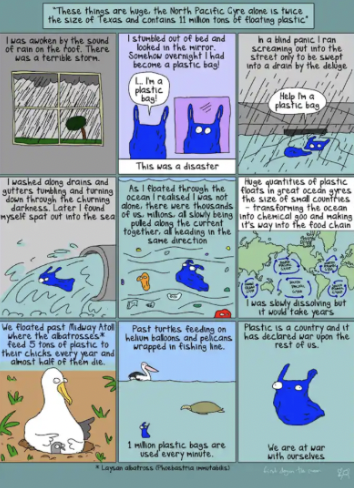
This text is taken from the cartoon series First Dog on the Moon, published in The Guardian Australia.
The purpose is to criticise plastic pollution and human negligence, urging readers to recognise the environmental consequences of their consumer behaviour and feel a sense of responsibility and urgency.
The cartoon is the best vehicle because its first‑person narrative allows the writer to speak from the perspective of a plastic bag, making the environmental damage feel personal, immediate, and morally confronting rather than distant or abstract.
PODCAST
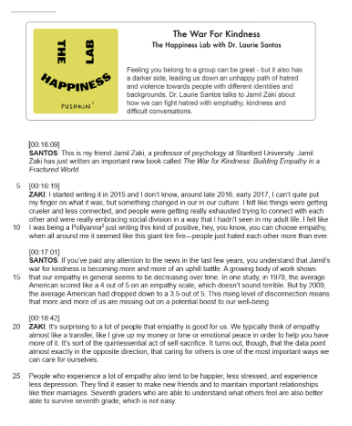
This transcript is from the podcast The Happiness Lab, hosted by Dr Laurie Santos, professor of psychology at Yale University.
The purpose is to explore declining empathy and social division while encouraging listeners to see empathy and kindness as practical ways to rebuild connection and improve collective well‑being.
The podcast format is the best vehicle because its conversational, discussion‑based style models empathy in action, allowing ideas to be explored reflectively and collaboratively, which makes the call for greater understanding feel authentic and achievable.
OPINION ARTICLE
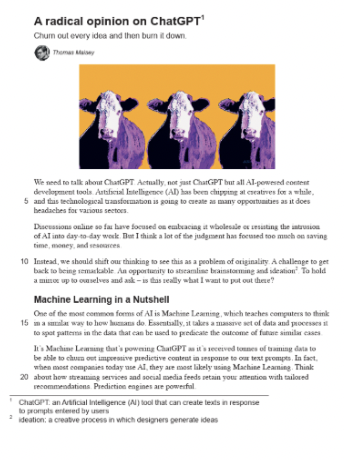
This is an opinion article published in UX Collective, an online newsletter and blog that encourages designers to think critically about their work, particularly in the field of user experience (UX).
The purpose is to question how designers should respond to AI tools like ChatGPT and to encourage more critical, reflective, and originality‑driven approaches to creative work.
The opinion article is the best vehicle because the topic is inherently subjective and value‑laden, requiring interpretation, personal perspective, and persuasive argument rather than detached reporting.
OPEN LETTER
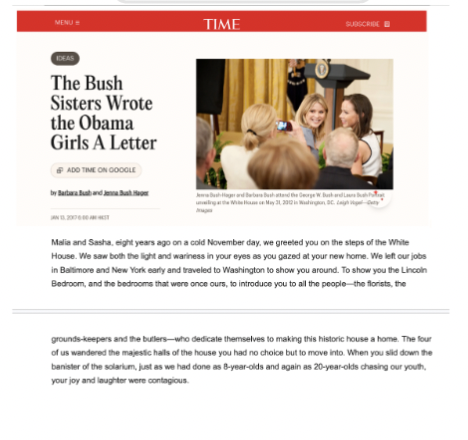
This is an open letter written by Barbara and Jenna Bush addressing Malia and Sasha Obama.
The purpose is to offer guidance and reassurance about navigating a life that is both intensely private and publicly scrutinised.
The open letter is the best vehicle because the message centres on the tension between private experience and public visibility, and the format itself mirrors this reality by presenting a deeply personal, empathetic message within a public forum, reinforcing the blend of intimacy, solidarity, and shared experience.
JOURNAL ENTRY
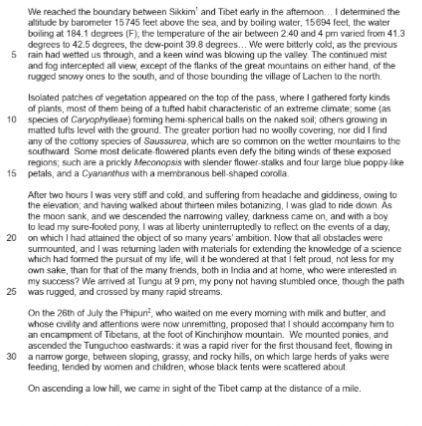
This is a journal entry written and illustrated by J.D. Hooker, published following his expedition to the Himalayas (1847–1851).
The purpose is to document his scientific discoveries while conveying the personal significance of completing a long‑held ambition, presenting the journey as both a major scientific achievement and a test of personal resilience.
The journal entry is the best vehicle because it allows Hooker to record precise scientific observations—measurements, species names, and environmental conditions—while also reflecting on his emotional response to reaching his goal, combining empirical authority with understated personal fulfilment in a way that a purely scientific report could not
WEBSITE
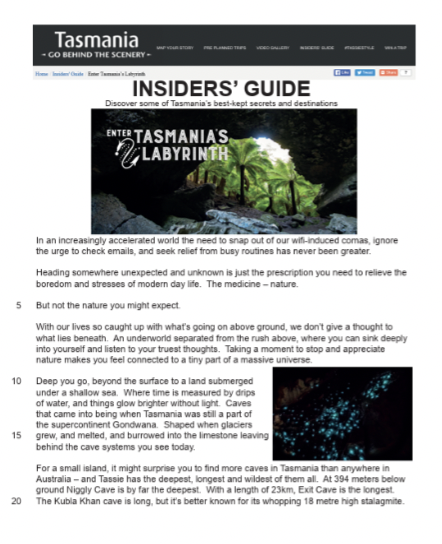
This text is adapted from the Tasmanian tourism website Go Behind the Scenery (2016), featuring writing by Kathryn Leahy and an image by George Apostolidis.
The purpose is to promote Tasmania—specifically Mole Creek Karst National Park—as a restorative and extraordinary destination, positioning nature as a remedy for the stresses of modern life.
The tourism website is the best vehicle because, as an official government‑affiliated platform, it carries institutional authority and credibility, allowing the promotional message to feel reliable and trustworthy, as though it comes directly from the source rather than from a subjective or commercial third party
SPEECH
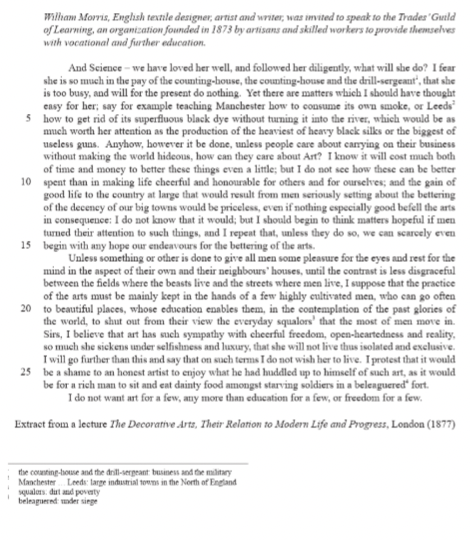
This is a public speech delivered by William Morris to working men.
The purpose is to criticise industrial society for valuing profit over beauty and human dignity, and to advocate for art as a democratic force that should be accessible to all rather than restricted to a privileged few.
The speech is the best vehicle because its face‑to‑face nature allows Morris to engage his audience directly, using voice, emphasis, and emotional appeal to create urgency and solidarity, making his reformist message more immediate, persuasive, and collectively empowering than a private written text would be.
BOOK
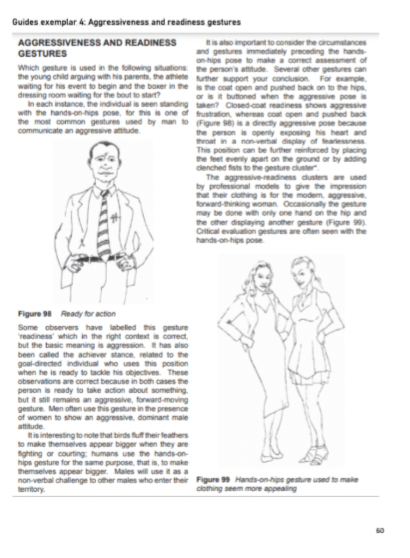
This is an extract from the self‑help book Body Language: How to Read Others’ Thoughts by Their Gestures by Allan Pease (1981).
The purpose is to instruct readers on how to interpret body language, presenting non‑verbal communication as systematic and understandable through clear rules and patterns.
The self‑help book is the best vehicle because its structured chapters and instructional format establish the writer as organised, knowledgeable, and methodical, appealing to ethos and reinforcing his authoritative, confident stance that body language can be decoded and applied reliably in everyday life..
🔹 Editorial
The editorial persuades readers by speaking with the authority of the publication, presenting its argument as a reasoned, collective judgment, which increases credibility and encourages readers to align with what appears to be an informed institutional position.
🔹 News Report
The news report persuades indirectly by presenting information through verified sources and balanced structure, creating an impression of objectivity that builds trust and subtly shapes audience understanding of events.
🔹 Memoir / Autobiography
The memoir persuades by inviting readers into a deeply personal narrative, using reflection and emotional honesty to foster empathy and encourage readers to adopt the writer’s perspective.
🔹 Documentary (Film or TV)
The documentary persuades by combining visual evidence, expert interviews, and narrative framing, reinforcing its message through both emotional impact and factual authority.
🔹 TED Talk
The TED Talk persuades by blending expert knowledge with personal storytelling and engaging delivery, making complex ideas feel both credible and inspiring.
🔹 Social Media Post / Campaign
The social media format persuades by delivering concise, emotionally charged messages that are easily shared, amplifying influence through rapid circulation and audience interaction.
🔹 Advertisement (Commercial)
The commercial advertisement persuades by linking the product to aspirational imagery and emotional appeal, encouraging audiences to associate the brand with desirable values or lifestyles.
🔹 Academic Article
The academic article persuades by grounding its claims in research, evidence, and formal reasoning, appealing to logic and scholarly credibility to convince its audience.
🔹 Letter to the Editor
The letter to the editor persuades by giving an ordinary individual a public platform, making the argument feel authentic and relatable, and encouraging readers to reflect on shared community concerns.
🔹 Manifesto
The manifesto persuades by using bold, direct statements that present ideas as urgent and unquestionable, pushing readers to take a clear stance and commit to action.
🔹 Report (Government or Corporate)
The report persuades by presenting structured data and official analysis, using its formal tone and evidence to position its conclusions as authoritative and difficult to dismiss.
🔹 Review (Book/Film/Product)
The review persuades by offering informed evaluation and critical judgment, guiding readers’ interpretations and influencing their decisions or expectations.