Paper 1 Analysis — Editorial
Read the editorial here.
Textual Analysis (Commentary)
Introduction
This text is a newspaper editorial about media coverage of sharks during “Shark Week,” commenting on how television and news outlets sensationalize shark attacks and exaggerate the danger sharks pose to humans. It is targeted at readers of The Washington Times, specifically those who follow popular media and current events and may be influenced by dramatic news reporting. The purpose is to criticise the media’s fear‑mongering and encourage readers to adopt a more balanced, rational perspective on sharks and shark attacks. This aim is accomplished through the use of statistics, historical references, irony, sarcasm, exaggerated imagery, and contrast between the rare danger sharks pose to humans and the far greater harm humans cause to sharks. In doing so, the writer also challenges a culture in which fear is used to attract attention and profit.
To begin dismantling this exaggerated sense of danger, the writer uses statistics to minimise the perceived risk of shark attacks and counter media exaggeration. By stating that the chances of being eaten by a shark are “roughly 1 in 4 million,” the editorial introduces a precise numerical statistic that undercuts the atmosphere of fear created earlier in the piece. This shifts the discussion from emotional appeal to logical reasoning, encouraging readers to reconsider whether their anxiety is proportionate to the actual danger. The statistic replaces sensational headlines with measurable reality, reinforcing that the threat has been overstated and positioning fact‑based reasoning as more credible than dramatic media reporting.
Extending this challenge to exaggerated perceptions of danger, the writer draws on historical references to demonstrate that such fear has long been constructed by media and popular culture. The mention of Jaws functions as a cultural allusion, highlighting the lasting impact of fictional portrayals that cast sharks as villains. Similarly, the reference to the 1916 shark attacks and the dramatic New York Times headline illustrates historical precedent and media amplification of isolated events. By situating current “Shark Week” hysteria within this broader historical pattern, the writer establishes a sense of continuity, strengthening the argument that sensationalism is ongoing rather than isolated.
Building on this idea of manufactured hysteria, the writer employs irony, sarcasm, and hyperbolic imagery to expose media hype. Descriptions such as sharks invading “everyone’s upstairs bathtubs” act as hyperbole, parodying dramatic reporting and highlighting its absurdity. The commentary on “the most wonderful week of the year” and the “Feeding Frenzy Fan of the Night” demonstrates mocking tone and satirical diction, ridiculing attempts to glamorise danger. Through the mimicry of overblown media language, the writer uses satire to expose excess and align readers with a sceptical view of the manufactured hype.
Having dismantled the culture of fear, the writer reframes the narrative through contrast by juxtaposing the minimal threat sharks pose to humans with the far greater harm humans inflict on sharks. While shark attacks are described as statistically uncommon, humans kill “thousands” of sharks annually, creating a clear moral reversal. This comparison shifts the traditional predator‑prey binary, presenting sharks not as villains but as victims of human activity. The editorial concludes with the reminder that “the surf is their turf,” employing rhyme and a memorable aphoristic phrase to reinforce the idea that humans are intruding into sharks’ habitat and leaving readers with a clear moral challenge.
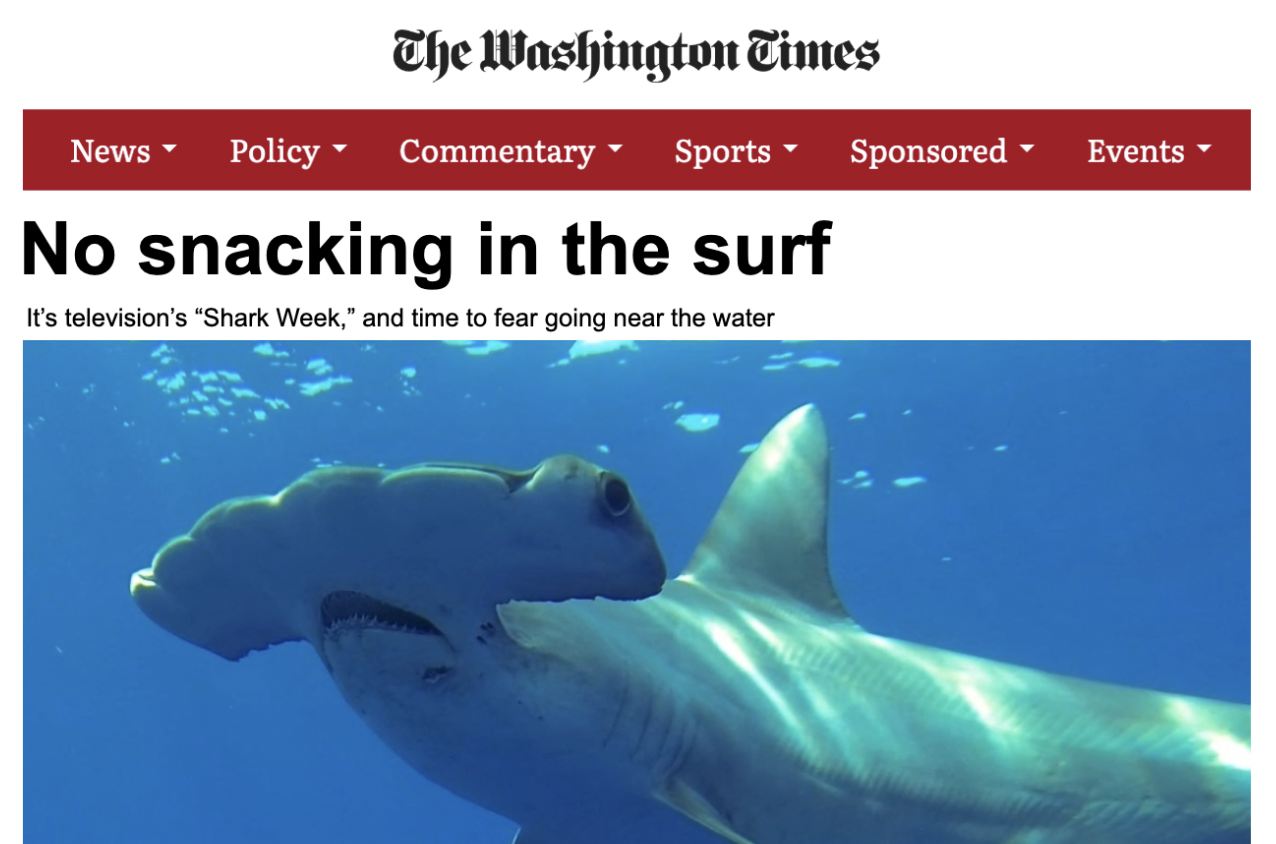
Echoing this shift in perspective, the title and image immediately challenge the culture of fear the article critiques. The title, “No snacking in the surf,” uses colloquial diction, irony, and subtle humour to trivialize the threat and signal rejection of media hype, while the subheading creates contextual framing through reference to “Shark Week.” The bold headline demonstrates visual emphasis, while the large image of the Great Hammerhead, framed in a long shot with cool colour tones, creates a calm visual mood. This visual‑verbal contrast reinforces the argument that sharks are exaggerated and unfairly demonised by the media.
Ultimately, the article’s most salient persuasive feature is its sustained use of irony and satire, which dismantles media hysteria and encourages readers to question sensational narratives. However, this tone may alienate those personally affected by recent shark attacks, as the satirical approach risks appearing dismissive of genuine concern. While satire is persuasive, it carries the potential drawback of seeming insensitive.