Reverse the Claim To Reveal the Audience
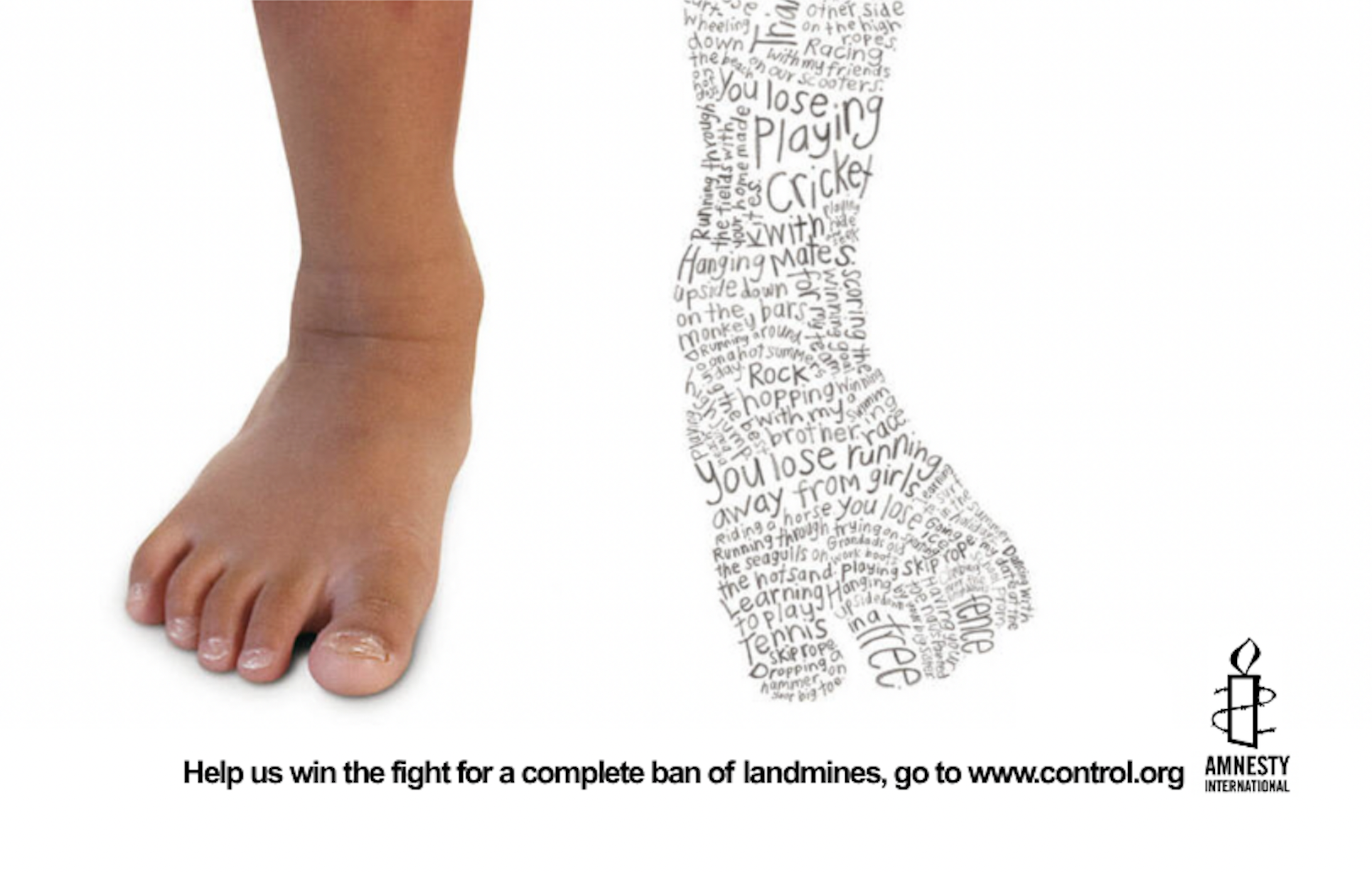
Click here for he full advertisement.
Finding the Target Audience
A target audience is not an age group or “the general public.” It is a group of people who share certain beliefs, values or experiences.
To identify them, ask: What does the text want readers to think differently about?
1. Reverse the main claim
The Amnesty International advertisement says:
“When you lose a leg you don’t just lose a leg.”
Try turning this claim around:
Losing a leg is only a physical loss.
This reveals the limited view the advertisement challenges. It suggests readers who understand that landmines damage the body but may not have thought about how that injury affects daily life.
Reversing a claim is a useful clue—not proof that every reader holds the opposite belief. The text may simply be asking readers to consider something they have overlooked.
2. Find the values behind the appeal
Next, ask: What does the text expect readers to care about?
The words forming the missing leg describe games, friendships and childhood activities. These details work because readers are expected to value play, belonging and freedom.
The advertisement therefore uses something familiar to explain something unfamiliar: readers may never have experienced landmine violence, but they can remember playing with friends.
This suggests a nuanced audience:
Viewers removed from landmine-affected communities who value their own childhood freedoms but may overlook how landmine injuries threaten those experiences.
Parents may be especially receptive, but the appeal is not limited to them.
3. Explain how a feature changes their thinking
When writing your analysis, connect three things:
The feature: What choice does the text make?
The audience: What might these readers believe or value?
The change: What does the text encourage them to understand?
For example:
The words forming the missing leg describe familiar childhood activities. For viewers who remember enjoying these freedoms, the silhouette challenges the idea that amputation is only a bodily loss, showing how it can also threaten participation and friendship.
This is stronger than saying “the image makes the audience sad.” It explains why this particular audience might respond and what they are encouraged to rethink.
The key is to distinguish between the belief being challenged and the value being used: the ad challenges a narrow understanding of injury while appealing to an existing appreciation of childhood freedom.
Exemplar Essay
GQ – How does the text appeal to multiple audiences?
Addressing distant viewers unfamiliar with the everyday consequences of landmine injuries, adults recalling childhood freedoms, parents concerned for their children, and potential campaign supporters and donors, this Amnesty International advertisement seeks support for a complete ban on landmines. Its photography, typographic silhouette and direct appeal make the issue concrete, personally meaningful and actionable for these overlapping audiences.
The cropped photograph and stark white background focus attention on the physical consequences of injury. By excluding the person’s face and upper body, the advertisement makes the contrast between the intact leg and the amputated limb its visual centre. The bare foot establishes an expectation of bodily completeness, which the other leg abruptly interrupts. Meanwhile, the visible scar directs attention towards the lasting aftermath of violence rather than the moment of an explosion. No geographical setting identifies the injury as belonging to a distant conflict. For readers removed from landmine-affected communities, this concentrated presentation makes an unfamiliar political issue concrete through a body whose vulnerability they can recognise.
The typographic reconstruction of the missing limb is, in my assessment, the advertisement’s most persuasive feature. Words describing activities form the outline of a calf, ankle and foot, occupying the space where the leg would otherwise appear. This arrangement connects physical absence with threatened experiences, allowing the audience to grasp the central argument before reading every phrase. The uneven, handwritten-style lettering gives those experiences an informal, personal quality, while variations in size establish a reading hierarchy: the main statement attracts attention first, and smaller phrases reward closer inspection. For adults recalling their childhoods or imagining their children’s futures, the word-built limb makes the consequences of injury tangible through experiences they already value.
Repetition and direct address expand the meaning of loss. The statement “When you lose a leg you don’t just lose a leg” repeats the physical injury before inviting readers to consider its wider effects. The recurring phrase “you lose” then gives the surrounding activities a cumulative force, presenting one injury as a disruption across many areas of life. Addressing the reader as “you” also reduces the distance between observer and injured person, asking the audience to imagine these restrictions personally. For readers who might otherwise treat landmines as a remote policy concern, this direct address makes the campaign relevant to their own understanding of independence.
The vocabulary of games and friendships gives that argument emotional specificity. References to “playing tag,” “cricket” and “the football team” evoke movement, enjoyment and participation in a group. “With friends” makes the social implications explicit, suggesting that injury can affect opportunities for companionship as well as physical activity. The playful phrase “running away from girls” introduces youthful humour, creating a painful contrast with the seriousness of amputation. Although the repeated emphasis on losing these activities leaves little room for adaptation after injury, it clearly supports the advertisement’s preventive purpose. For parents familiar with these childhood pastimes, such details invite empathy through recognisable pleasures rather than requiring prior knowledge of landmine warfare.
The concluding imperative and organisational branding channel this emotional response towards campaigning. “Help us win the fight for a complete ban of landmines” identifies the desired outcome: “Help” recruits the reader, while “us” offers membership in a collective effort. The metaphor of a “fight” presents campaigning as purposeful action, and “complete ban” gives that action a defined objective. Amnesty International’s name and emblem identify who is making the appeal, while their small scale keeps the injured person visually dominant. The website offers a practical next step, although the advertisement does not specify what visitors will be asked to do. For sympathetic readers, particularly those who recognise Amnesty International, this closing combination provides an identifiable organisation and an accessible route for acting on their concern.
Overall, the word-built leg makes landmine injuries concrete for distant viewers, evokes valued childhood memories for adults, raises concern about children’s future experiences for parents, and offers an emotional reason to contribute for potential donors. However, its focus on loss risks suggests that life after amputation offers few possibilities, giving these audiences an incomplete understanding of how people adapt and continue to lead fulfilling lives.