Paper 1: Thematic Approach
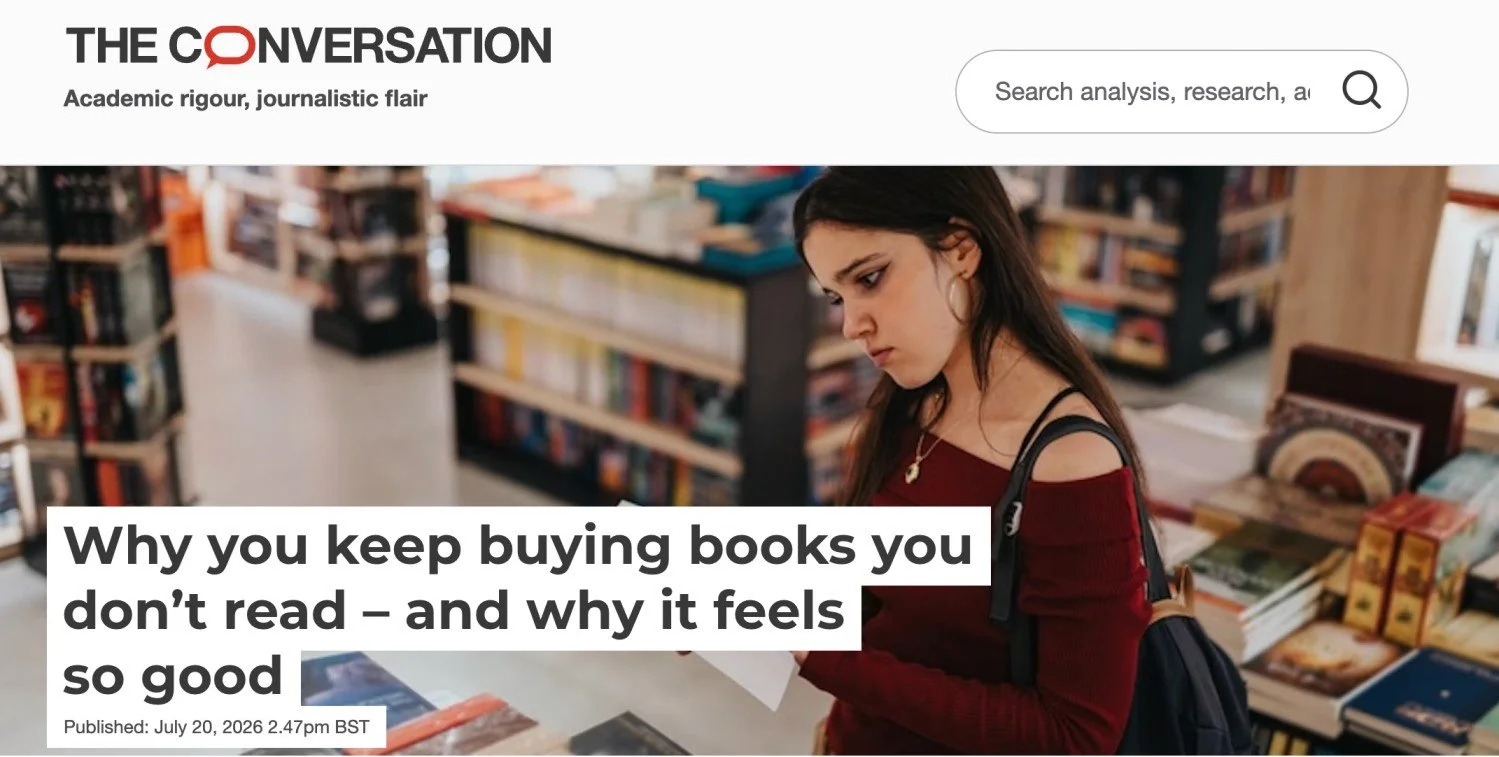
Spear, Michelle. “Why You Keep Buying Books You Don’t Read – and Why It Feels So Good.” The Conversation, 20 July 2026,
Why the Thematic Approach Beats the Features Approach
One of the biggest mistakes students make in IB English A Paper 1 is organising their essay by features rather than by ideas. A features-based essay usually has paragraphs like: “The writer uses diction,” “The writer uses tone,” “The writer uses imagery,” or “The writer uses structure.” While this can seem clear, it often leads to a mechanical essay that lists techniques instead of building an argument.
A thematic approach is much more efficient and effective because it organises the essay around the writer’s main ideas, purposes and effects. Instead of asking, “What techniques are used?”, the student asks, “What is the text trying to make the audience think, feel or believe?” Techniques are then used as evidence to support that argument.
How students can find themes
To find themes quickly in Paper 1, students should ask, What is the writer arguing? In a thematic essay, the topic of each body paragraph should focus on one main argument.
For example, Spear’s article contains the following the topic sentences:
Unread books are objects of optimism and anticipation.
Unread books are future rewards rather than burdens.
Science makes book-buying seem natural and reasonable.
Physical books and bookshops provide comfort and wellbeing.
Each body paragraph focuses on a clear idea: unread books as objects of optimism and anticipation, unread books as future rewards rather than burdens, neuroscience as a way of legitimising the habit, and bookshops as spaces of sensory comfort and wellbeing. This means the essay is not simply naming features; it is tracking how the article gradually changes the reader’s attitude from guilt to reassurance.
These are stronger than paragraphs on “diction” or “imagery” because they explain what the writer wants the reader to believe. So instead of: The writer uses diction. Write: The writer presents unread books as sources of optimism and future pleasure. Then use diction, imagery, tone and structure as evidence.
Efficiency Under Exam Conditions
The thematic approach is also more efficient under exam conditions. In Paper 1, students do not have time to analyse every technique separately. By organising around three or four central ideas, they can select only the most relevant evidence. For example, in the sample essay, the paragraph about “future rewards rather than burdens” brings together contrast, diction and visual analysis in one focused argument. This allows the essay to cover more ground without becoming a list.
Stronger Evaluation of Audience and Purpose
Most importantly, thematic writing improves evaluation. IB examiners are not only looking for identification of techniques; they want to see how choices shape meaning for a specific audience. The sample essay repeatedly links features to the article’s purpose: reassuring educated adult readers that buying unread books is emotionally valuable rather than wasteful. Because each paragraph begins with a meaningful claim, the analysis naturally stays connected to audience and purpose.
From Description to Argument
In short, the features approach often produces description: “The writer uses imagery.” The thematic approach produces argument: “The writer presents bookshops as spaces of comfort and possibility.” That difference matters. A Paper 1 essay should not be a catalogue of techniques; it should be a coherent interpretation of how a text works.
Key Lesson for Higher Marks
For students aiming for higher marks, the lesson is simple: start with ideas, not devices. Look for the writer’s topics, arguments, and/or claims. Once you have found those themes, use features to prove how the text develops them. This creates writing that is more focused, more persuasive and much closer to what IB English A examiners reward.
Example Essay
In a contemporary digital culture shaped by busy schedules, productivity pressure and guilt over unfinished personal goals, Michael Spear’s online article “Why you keep buying books you don’t read – and why it feels so good” targets educated adult readers who recognise the experience of buying books that remain unread and may feel conflicted by this habit. The writer argues that unread books are not signs of wastefulness or poor discipline, but objects of anticipation, sources of future reward and contributors to emotional wellbeing. Through a relatable yet knowledgeable tone, scientific explanation, positive diction, contrast, sensory imagery and the comforting image of a young woman browsing in a bookshop, Spear persuades readers to view accumulating unread books as emotionally valuable and naturally connected to future pleasure.
The writer first reframes unread books as objects of optimism and anticipation, with cultural reference, positive diction, and visual representation, encouraging readers to reject the idea that this habit shows wastefulness or poor discipline. This is supported through the Japanese term “tsundoku,” which gives the accumulation of unread books a more elegant and meaningful identity. Instead of describing these books as clutter, the article states that the term captures the “quiet optimism of a pile of books.” The positive diction of “optimism” presents book-buying as hopeful, suggesting that unread books represent future possibilities rather than failure. This casts Spear as an understanding and non-judgemental writer who validates the reader’s private habits rather than criticising them. This is reinforced by the image of the young woman browsing, as her focused downward gaze, calm expression and solitary presence make book-buying appear thoughtful, private and reflective. These choices persuade the audience by turning a potentially guilty habit into a hopeful expression of future intention.
Building on this, the article presents unread books as future rewards rather than burdens, through contrast, diction, and visual design. This is shown through the contrast between “unanswered emails” and “unread books.” The phrase “unanswered emails are future obligations” uses demanding diction to present emails as stressful tasks waiting to be completed. In contrast, “unread books are future rewards” uses positive diction to associate books with pleasure and possibility. By using this contrast, Spear frames himself as a reassuring commentator who understands the pressures of modern life and offers books as an emotional escape from them. The image reinforces this distinction through its warm colour palette, soft indoor lighting and absence of work-related objects, which separate the bookshop from stress and obligation. By positioning books against emails, the text reassures readers that unread books represent pleasure rather than another source of pressure.
The article then deepens this reassurance through scientific explanation, arguing that books create pleasure through anticipation before they are even opened. Terms such as “dopamine,” “reward system,” “ventral tegmental area” and “nucleus accumbens” create a knowledgeable and credible tone, making the explanation seem reliable. Here, scientific language positions Spear as informed and authoritative, allowing his emotional reassurance to seem evidence-based rather than merely personal opinion. The statement that “the brain often rewards us in advance” directly supports the idea that satisfaction can come from expecting a future reading experience. Visually, the woman’s slightly hunched posture and close hold on the book suggest focused engagement before reading has begun. By using neuroscience, the writer persuasively reassures readers that buying unread books is not irrational, but connected to natural reward processes.
Finally, the article presents physical books and bookshops as sources of sensory comfort and wellbeing, by drawing on sensory imagery, positive diction, tone, and visual composition. This is shown through sensory imagery in “the distinctive, slightly sweet scent of paper and ink,” which helps readers imagine the physical pleasure of browsing. The author also calls the bookshop one of their “natural habitats,” creating a tone of affection and familiarity that situates Spear as both a fellow book-lover and an empathetic insider. Positive diction in phrases such as “improve mood,” “increase motivation” and “buffer against everyday stress” presents anticipation as psychologically beneficial, while comforting imagery of reading “on a summer holiday,” “during a long train journey” or “curled up on the sofa on a rainy afternoon” connects unread books to future rest. The image supports this through the visible shelves, blurred background and slightly elevated camera angle, which make the bookshop seem like a space of abundance and possibility. These choices validate the emotional attachment readers may have to books, presenting browsing and anticipation as meaningful rather than merely consumerist.
Overall, the article effectively reframes guilt over unread books as emotional wellbeing by moving from a relatable problem, to scientific legitimisation, and finally to reassurance, guiding readers toward a more positive view of their habits. While the article’s reframing validates unread books as symbols of aspiration and comfort, it also shows how media can perpetuate consumerism by reframing repeated purchasing as self-improvement rather than overconsumption.