Think of your topic sentence as a promise to your reader: this is what I’ll analyse, and this is why it matters. Instead of simply announcing a technique, connect it to the audience and what the writer wants to achieve.
A strong topic sentence should:
Flow from the previous paragraph. Pick up an idea you have already discussed rather than adding “Furthermore” just for the sake of it.
Clearly name the focus. Tell your reader whether you’re exploring emotive language, visual contrast or another strategy.
Identify the audience’s specific beliefs or values. Think beyond “getting their attention.” Do they care about social responsibility, financial security or fairness?
Explain the purpose. What does the writer want this audience to think, feel or do?
For example:
Building on the sense of urgency created by the statistics, the ad’s problem–solution structure appeals to investors who want their money to make a positive difference, encouraging them to consider investing in Brazil Potash.
“Building on the sense of urgency” connects naturally to a previous paragraph about statistics. The sentence then names the structural device, identifies the investors’ values and explains the intended action.
You don’t need to cram in complicated vocabulary. A clear argument is more useful than an impressive-sounding sentence. Once you’ve written it, ask yourself: does this tell my reader what I’m analysing, who it appeals to and why?
Practice Paper & Essay Response
Click here for the original text.
Guiding Question: How do visuals, language, and structure help convey the text’s purpose?
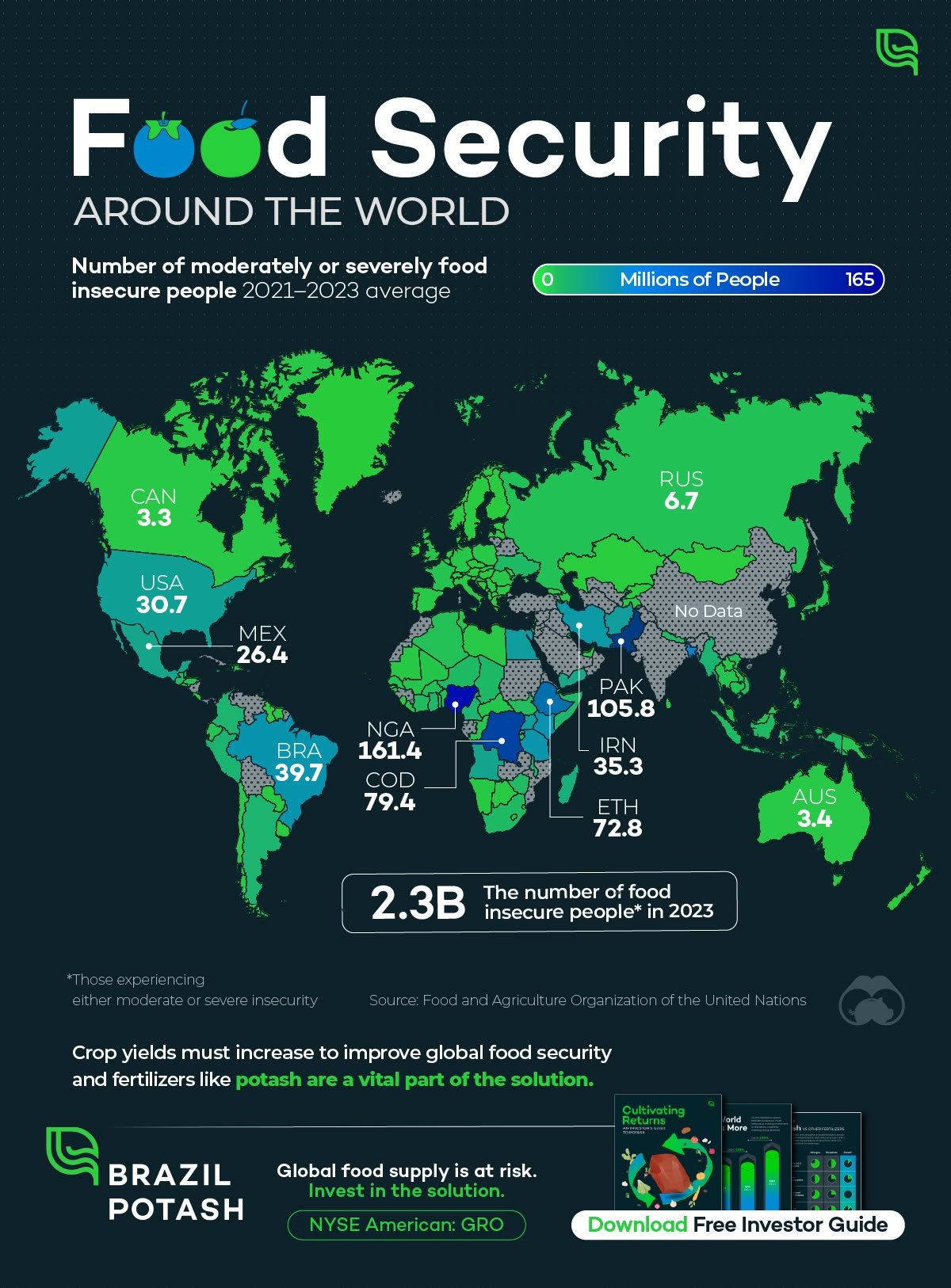
In modern society, where food insecurity affects billions of people, socially conscious investors seek opportunities that offer financial potential while making a positive difference. The provided text, a promotional infographic titled “Food Security Around the World,” produced by Brazil Potash, draws on data from 2021–2023, although its publication date and platform are not identified. It aims to persuade potential investors to invest in the company and download its free investor guide. Combining emotive language and credible statistics with a colour-coded world map and a clear problem–solution structure, the infographic makes a complex global issue feel immediate and understandable. In doing so, it encourages readers to see investing in Brazil Potash as an opportunity to support a more food-secure future.
Targeting potential investors who value global food security and socially responsible investment, the infographic uses visual devices to make hunger feel urgent and Brazil Potash’s proposed solution appealing. The central world map shows that food insecurity affects communities across continents, encouraging readers to see it as a shared human concern. Its green-to-blue colour coding and accompanying key make national figures easy to compare, although using total numbers rather than population percentages limits comparisons of how widespread insecurity is within each country. Large, bold typography emphasises the title and statistics, particularly “2.3B,” making the scale of the problem difficult to overlook. White text contrasts with the dark background for readability, while bright green highlights the proposed solution and investment message, associating the company with growth and positive change. The fruit illustrations replacing the letters “o” in “Food” make the title memorable and bring a familiar, everyday element to an otherwise overwhelming issue. Finally, the company logos and investor-guide images build brand recognition and give readers something concrete to explore. These devices effectively attract attention, while directing concern about food insecurity towards a commercial opportunity.
Building on these investors’ belief that investment decisions should be supported by credible evidence and make a meaningful difference, the infographic’s language combines factual authority with emotional persuasion. Statistics such as “2.3B” and the country-specific figures demonstrate the scale of food insecurity, reminding readers that the issue affects substantial numbers of people. Citing the Food and Agriculture Organization of the United Nations adds authority, although this source supports the food-insecurity figures rather than necessarily endorsing the company’s investment claims. The emotive statement “Global food supply is at risk” appeals to readers’ concern for vulnerable communities and creates urgency. Assertive expressions such as “must increase” and “a vital part of the solution” then present higher crop yields and potash fertilizer as essential responses. This problem–solution framing makes the argument easy to follow, but it also simplifies a complex issue by foregrounding the product being promoted. Finally, the imperatives “Invest in the solution” and “Download Free Investor Guide” turn concern into clear actions. Calling investment part of “the solution” appeals to readers’ desire to contribute positively, while “Free” makes exploring the opportunity seem accessible and low-risk.
Further appealing to potential investors who value clear information and practical ways to act on their concerns, the infographic’s structure leads readers from the global problem to the company’s investment offer. The prominent headline establishes the topic, while the subtitle explains the measure and the 2021–2023 timeframe, giving readers context before they examine the figures. The central infographic presents information in a readily scannable format, and its country labels and callout lines connect statistics to locations without lengthy explanation. Below the map, the boxed “2.3B” statistic summarises the global scale for 2023, creating a strong point of emphasis before the text introduces fertilizer as a response. The source and footnote provide attribution and clarify the meaning of food insecurity, supporting informed reading, although their small, muted lettering makes them less prominent than the persuasive claims. The progression from problem to solution then culminates in Brazil Potash’s branding and the call to download the investor guide. Placing this invitation at the bottom gives readers a next step after their concern has been established. The sequence is persuasive because it connects an investment opportunity with a humanitarian purpose, though readers should distinguish the evidence about hunger from the company’s claim that investing in its business is an effective response.
Overall, the ad’s most salient feature, its problem–solution structure, effectively turns concern about global food insecurity into interest in Brazil Potash. However, its strong investment focus may leave readers questioning whether helping people facing hunger or generating profit is its main priority, weakening its humanitarian appeal.